
Bullbit BUBI: AI-Powered Perpetual DEX

Table of Contents

Bullbit is a decentralized perpetual exchange designed to let users trade perpetual contracts through an order-book-based trading system. The platform combines trading infrastructure with features such as smart-contract wallets, passkey login, gas abstraction, and AI-assisted trading tools. Its goal is to make decentralized derivatives trading more accessible while offering an experience closer to that of a centralized exchange.
The BUBI token is associated with the Bullbit ecosystem, but its specific utility should be evaluated separately from the exchange’s trading features. Understanding Bullbit requires examining how its central limit order book works, how users access and manage their accounts, and how its AI tools fit into the trading process. The platform’s infrastructure and future development plans are also relevant to its long-term direction. Perpetual trading carries significant risks, including leverage-related losses, liquidation, liquidity constraints, and technical vulnerabilities. Understanding these features and risks is essential before using the platform or evaluating BUBI.
For more insights and updates on the latest cryptocurrency trends, check out our Nifty Finances platform, your gateway to smarter financial decisions in the digital economy.
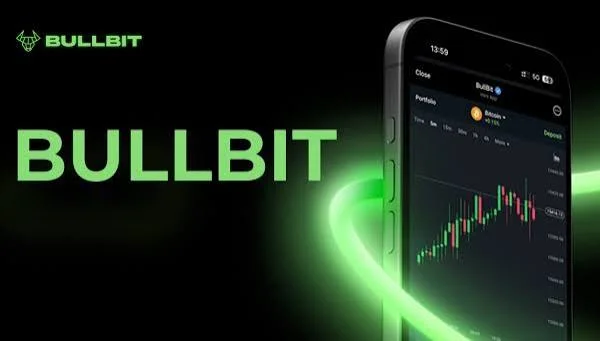
What Is Bullbit PERP DEX and How Does It Work?
Bullbit is a decentralized exchange (DEX) focused on perpetual futures trading, offering a platform where users can take long or short positions on supported cryptocurrency markets without relying on a traditional centralized exchange account. Its goal is to combine blockchain-based asset management with a trading experience that resembles a centralized exchange (CEX), including an order book, streamlined account access, and tools designed to make derivatives trading more accessible.
Bullbit emphasizes an institutional-style central limit order book (CLOB), smart wallets powered by account abstraction, and an interface intended to simplify on-chain trading. The platform also incorporates AI-oriented trading tools as part of its broader effort to reduce the complexity traditionally associated with decentralized finance.
Understanding Perpetual Futures Trading
Perpetual futures are derivative contracts that allow traders to speculate on an asset’s price movements without a fixed expiration date. Unlike conventional futures contracts that settle on a specified date, perpetual contracts can remain open as long as the trader meets the platform’s margin requirements and the position remains valid under the applicable rules.
Traders generally take one of two directional positions:
- Long position: A trader expects the underlying asset’s price to rise and seeks to benefit from an increase.
- Short position: A trader expects the underlying asset’s price to fall and seeks to benefit from a decrease.
Perpetual contracts commonly use leverage, which allows traders to control a position larger than the collateral they commit. Although leverage can amplify potential gains, it also magnifies losses and can result in liquidation when available margin falls below required levels.
Perpetual markets may also use funding payments between long and short traders to help keep contract prices aligned with the underlying market. The applicable funding rates, margin rules, and liquidation procedures depend on the specific market and platform configuration.
How Bullbit’s Decentralized Exchange Works
Bullbit aims to provide familiar trading functionality while using blockchain infrastructure for asset management and settlement. Rather than presenting trading as a series of complex blockchain operations, its interface is designed to let users view markets, submit orders, monitor positions, and manage trades through a consolidated experience.
The platform’s central limit order book matches buy and sell orders according to price and execution rules. Traders can interact with available liquidity using supported order types, while the matching system helps process trades. Bullbit describes its engine as an in-memory CLOB designed for high-speed order matching.
An important distinction is that fast order matching and final on-chain settlement are not necessarily the same event. The platform’s terms explain that matching may initially occur through its application-level infrastructure, while a transaction is considered complete when the relevant blockchain transaction is successfully confirmed. Users should therefore understand the difference between a displayed trade state and its final settlement status.
Smart Wallets and Simplified Account Access
Bullbit uses smart wallets based on account abstraction to simplify the process of accessing blockchain trading. Instead of requiring users to manage a conventional externally owned wallet in the usual way, the platform’s smart-wallet model supports account access through passkey-based authentication.
Passkeys can make login more familiar by using supported device authentication methods, potentially reducing the need to handle traditional seed phrases directly during ordinary account access. Bullbit also promotes gas-fee abstraction, which aims to handle blockchain transaction costs behind the scenes rather than requiring users to manually manage gas tokens for each interaction.
These features can reduce friction, but they do not eliminate the need to understand wallet security, account recovery, platform rules, or the underlying smart contracts.
Reducing Intermediaries While Managing Risk
Decentralized trading can reduce reliance on certain traditional intermediaries by allowing users to interact with blockchain-based systems rather than placing all assets under a centralized exchange’s custody. Nevertheless, a DEX still depends on software, smart contracts, market data, matching infrastructure, and blockchain settlement.
Bullbit’s model therefore combines decentralized asset-management goals with a specialized trading interface and supporting infrastructure. Users should evaluate smart-contract risks, system availability, execution delays, liquidity, trading fees, funding payments, and liquidation rules before using the platform.
Bullbit seeks to make perpetual futures trading feel more familiar while retaining important elements of on-chain trading. Its order-book model, smart-wallet access, and streamlined interface may lower technical barriers, but they can’t eliminate the financial risks of leveraged derivatives or guarantee uninterrupted, successful execution.

Bullbit’s Central Limit Order Book (CLOB)
Bullbit uses a central limit order book (CLOB) model for its perpetual futures trading environment. A CLOB organizes buy and sell orders according to their prices and priority, helping traders find counterparties without relying on the traditional order-matching infrastructure of a centralized cryptocurrency exchange. In Bullbit’s case, this model is intended to combine a familiar trading interface with blockchain-based asset management and settlement.
Order-book trading differs from the automated market maker (AMM) model used by many decentralized exchanges. Rather than trading directly against a liquidity pool governed by a pricing formula, traders submit orders that can be matched with other compatible orders. The quality of this process depends on available liquidity, order placement, market activity, and the platform’s execution infrastructure.
How a Central Limit Order Book Works
A central limit order book collects orders from market participants and organizes them by price. Buy orders are known as bids, while sell orders are known as asks or offers. The system attempts to match compatible orders according to its execution rules.
For example, a trader may submit a buy order at a specified price. If a seller is willing to sell at that price or a lower one, the orders may be matched, subject to order priority and available quantity. When several orders are available at the same price, time priority is a common rule, although the exact matching policy depends on the platform.
Two widely used order types are:
- Market orders: Seek immediate execution against available orders on the opposite side of the book. The final execution price can vary when liquidity is limited or market prices move quickly.
- Limit orders: Specify the maximum price a buyer is willing to pay or the minimum price a seller is willing to accept. They provide price control but may remain unfilled if the market does not reach the specified level.
A limit order does not guarantee execution, and a market order does not guarantee a particular price.
Understanding Bids, Asks, and the Spread
The highest available bid represents the best price buyers are currently offering, while the lowest available ask represents the best price sellers are currently requesting. The difference between these two prices is called the bid-ask spread.
A narrow spread can indicate that buyers and sellers are quoting similar prices. A wider spread may reflect lower liquidity, greater uncertainty, or an imbalance between buy and sell interest. Traders who submit market orders generally interact with the available prices in the order book, so the spread can affect the cost of entering or exiting a position.
Order-book depth is also important. A market with substantial orders at several price levels may accommodate larger trades with less price movement than a market where only small quantities are available near the best bid or ask.
Bullbit’s Order-Matching Infrastructure
Bullbit describes its trading engine as an in-memory CLOB designed for high-speed order matching. This approach is intended to process orders efficiently and provide a responsive trading experience, particularly for perpetual futures markets where prices and positions can change rapidly.
However, order matching and blockchain settlement should be understood as distinct stages. An order may be processed by the trading infrastructure before the corresponding transaction reaches final confirmation on the blockchain. Users should check the platform’s order and settlement status rather than assuming that every displayed update represents a finalized on-chain transaction.
The overall trading experience can also depend on market-data delivery, connectivity, system availability, and the performance of supporting services.
Liquidity, Slippage, and Execution Quality
Slippage occurs when a trade executes at a different price from the one expected when the order was submitted. It can occur when the market moves before execution or when the available order-book depth cannot accommodate the entire order at the best quoted price.
For instance, a large market buy may consume several ask levels, resulting in an average purchase price higher than the lowest available ask. In a thin market, even a relatively modest order may move the execution price.
Traders can assess execution conditions by reviewing the spread, available quantities, expected order size, and relevant fees before submitting an order. Limit orders may help control the acceptable price, but they introduce the possibility that the trade will not execute.
Speed Does Not Guarantee Better Results
Fast order processing can improve responsiveness, but it does not guarantee favorable prices, profitable positions, or uninterrupted execution. Volatile markets, limited liquidity, system congestion, and changes in the wider trading infrastructure can all affect outcomes.
Bullbit’s CLOB is designed to provide structured order matching for perpetual futures trading. Understanding order priority, spread, liquidity, and slippage helps users assess the execution process while recognizing that actual performance depends on prevailing market conditions and the reliability of the complete trading system.

Bullbit’s AI Trading Assistant and Automated Trading Tools
Artificial intelligence is becoming an increasingly visible part of cryptocurrency trading, where market prices can change rapidly, and traders must evaluate large amounts of information. Bullbit incorporates AI-oriented tools into its decentralized perpetual futures trading experience, aiming to make certain trading tasks more accessible and help users interact with its platform more efficiently. These features fit into Bullbit’s broader approach of combining a familiar exchange-style interface with blockchain-based trading infrastructure.
AI-assisted trading can potentially help users interpret market information, organize trading decisions, and interact with complex tools. However, the specific capabilities available depend on Bullbit’s current implementation. It is important to distinguish between features that provide information or suggestions and systems that can actually submit, modify, or close trading orders.
How AI Assistance Can Support Trading
AI trading assistants generally use computational models to process information and present it in a more accessible format. Depending on the available functionality, such tools may help traders review market trends, interpret price movements, compare trading scenarios, or understand order parameters.
For example, an AI assistant could help explain how a change in funding rates might affect a perpetual futures position or summarize the differences between using a market order and a limit order. It might also help users organize relevant information before deciding whether to enter or exit a trade.
Potential uses of AI-assisted trading tools include:
- Market information analysis: Summarizing selected market data or identifying patterns that users may wish to investigate.
- Trading workflow support: Helping users understand order settings, position information, and relevant platform features.
- Decision support: Presenting possible scenarios or highlighting factors that could affect a trading decision.
- Interface assistance: Making complex trading functions easier to understand through natural-language interactions or guided workflows, where supported.
These examples describe common applications of AI in trading, not a guarantee that every function is currently available through Bullbit. Users should consult the platform’s live interface and official documentation to verify which tools are operational and what information they use.
Automated Analysis and Complex Trading Tasks
Perpetual futures trading can involve several variables, including entry prices, leverage, collateral, funding payments, liquidation thresholds, and order execution. Reviewing these factors manually can be time-consuming, particularly when markets are volatile.
Automated analysis can help organize information and reduce repetitive work. A tool might summarize relevant market indicators, help compare alternative order settings, or explain how a proposed position could respond to different price movements. Such assistance can make the decision-making process more structured, but the quality of the result depends on the data, assumptions, and logic used by the system.
Automated analysis should not be confused with automated execution. An assistant that explains a possible trading opportunity does not necessarily have permission or functionality to place an order. Similarly, a system that can submit orders may still require explicit authorization, user-defined parameters, or additional safeguards.
Before connecting an account or enabling an automated feature, users should understand what actions it can perform, what permissions it requires, and whether trades can be reviewed or cancelled.
AI Assistance Versus Automatic Trade Execution
An informational assistant primarily helps users interpret data and explore options. The user remains responsible for evaluating the output and deciding what action to take.
An automated trading system, by contrast, can execute predefined instructions or algorithmic strategies without requiring the user to approve every individual action, depending on its design. This can reduce manual effort but may also increase the speed at which errors or losses occur.
Users should verify whether any Bullbit tool merely provides recommendations or can interact directly with trading positions. They should also review order limits, account permissions, and available risk controls before relying on automation.
Risks of AI-Assisted Trading
AI systems can produce inaccurate interpretations, overlook relevant information, or generate recommendations based on incomplete or outdated data. Cryptocurrency markets are particularly challenging because liquidity, volatility, funding rates, and market sentiment can change quickly.
Other important risks include:
- Overreliance: Following recommendations without independently checking their assumptions.
- Unexpected conditions: Strategies that appear suitable in one market environment may perform poorly in another.
- Execution differences: An intended trade may execute at a different price or fail to execute as expected.
- Leverage exposure: Incorrect decisions in perpetual futures can lead to substantial losses or liquidation.
AI assistance cannot guarantee profitable trades, predict markets with certainty, or remove the financial risks associated with derivatives.
Using AI Tools Responsibly
Bullbit’s AI-oriented trading approach may help simplify parts of the trading experience, but users should treat automated analysis as a supporting resource rather than a substitute for independent judgment. Reviewing the platform’s current features, checking information against reliable market data, understanding execution permissions, and setting appropriate risk limits remain essential.
The value of an AI trading assistant depends on what it actually does, the reliability of its inputs, and how responsibly its output is used. No AI tool eliminates the possibility of losses, especially when leverage and volatile cryptocurrency markets are involved.
Bullbit is a decentralized perpetual exchange that combines order-book trading with smart-wallet access, passkey authentication, gas abstraction, and AI-assisted tools. Its purpose is to simplify the experience of trading perpetual contracts while retaining a blockchain-based trading model. BUBI is the token associated with the ecosystem, but its value and potential utility depend on the functions confirmed by official documentation and the project’s actual development.
Velvet Capital is an AI-powered, self-custodial onchain trading and portfolio management platform that unifies trading, DeFi strategies, portfolio construction, and automated execution.
Bullbit’s long-term progress will depend on factors such as trading reliability, liquidity, security, product delivery, and user adoption. BUBI should therefore be evaluated separately from Bullbit’s technology, and neither the platform’s features nor its development plans guarantee trading profits or future token appreciation.
[…] construction, and automated execution. Its current platform combines a trading terminal for spot, perpetuals, and yield strategies with AI-assisted market analysis, portfolio management tools, tokenized vault infrastructure, APIs, […]