
SLT SLT: Blockchain-Powered Logistics & Gamification

Table of Contents

What if logistics could become more transparent, efficient, and engaging through blockchain technology and gaming-inspired rewards? SLT (SLT) aims to bring this concept to life by combining digital assets, gamification, and logistics-focused incentives in one ecosystem. The project seeks to address challenges such as inefficient processes, limited transparency, and outdated supply chain systems by encouraging users to improve operational performance.
The SLT ecosystem targets a broad audience, including logistics professionals, companies, gamers, and sustainability advocates. Its proposed use cases include rewarding route optimization, supporting fuel-efficiency goals, encouraging environmentally conscious practices, and helping businesses recognize performance improvements. The SLT token is presented as part of this model, with potential roles in rewards, payments, staking, and governance.
The distinction between the project’s vision and its currently available products is important. SLT’s roadmap describes platform development and future integrations as ongoing goals, so readers should verify which features are operational before relying on them.
For more insights and updates on the latest cryptocurrency trends, check out our Nifty Finances platform, your gateway to smarter financial decisions in the digital economy.

What Is SLT and How Does Smart Logistics Work?
Smart Logistics Token (SLT) is a blockchain-based project focused on improving logistics through gamification, digital incentives, and greater supply chain transparency. SLT aims to bring logistics professionals, businesses, gamers, and sustainability advocates into an ecosystem where performance-based challenges and token rewards can encourage more efficient operations. Its broader vision is to combine blockchain technology with engaging digital experiences to help make logistics more transparent, efficient, and sustainable.
The project addresses an industry that depends on coordination between manufacturers, suppliers, warehouses, transportation providers, and retailers. When these participants use disconnected systems or lack timely access to reliable information, delays and communication problems can increase costs. SLT proposes a model in which blockchain infrastructure and gamified incentives can help improve accountability and encourage participants to pursue measurable operational goals.
Understanding the Challenges in Traditional Logistics
Logistics involves multiple organizations and processes working together to move goods from their origin to their destination. However, information is often distributed across separate management systems, delivery platforms, spreadsheets, and internal databases. When these systems do not communicate effectively, stakeholders may struggle to obtain a consistent view of shipment status and operational performance.
Several challenges illustrate why digital coordination matters:
- Fragmented information: Different participants may maintain separate records, making it harder to establish a consistent view of logistics activities.
- Limited transparency: Delayed or incomplete shipment information can make it difficult to investigate problems and determine responsibility.
- Operational inefficiency: Poor route planning, excessive fuel consumption, and missed delivery targets can increase costs.
- Weak performance incentives: Workers and organizations may lack consistent mechanisms for recognizing improvements in efficiency or sustainability.
SLT’s stated mission is to address these challenges through blockchain-enabled processes and token-based incentives. However, these are industry problems the project aims to tackle, not evidence that its proposed solutions have already improved logistics operations at scale.
How Blockchain Can Support Smart Logistics
Blockchain technology can provide a shared record of transactions and events that participating systems can inspect. In a logistics environment, properly designed applications could record shipment milestones, delivery confirmations, transfers of responsibility, or other operational events.
For example, a shipment workflow might record when goods leave a warehouse, arrive at a distribution center, and reach their destination. If the relevant participants submit authenticated records, a shared history could make it easier to review what happened and identify discrepancies.
Blockchain does not automatically make every logistics record accurate. Information about a physical shipment still needs to come from a trustworthy source, such as an authorized operator, tracking system, or sensor. If incorrect information is entered, recording it onchain does not make it true. Effective implementation therefore requires reliable data collection, appropriate permissions, and integration with existing logistics systems.
Gamification and SLT Token Incentives
A defining part of SLT’s approach is gamification: turning operational objectives into structured challenges with measurable goals and potential rewards. Instead of treating performance improvement solely as a management process, the project envisions using challenges and digital incentives to encourage participation.
It identifies several potential participant groups, including logistics professionals, companies, gamers, and sustainability advocates. Illustrative challenges could involve optimizing delivery routes, reducing fuel usage, meeting delivery targets, or exploring logistics-related missions through a game-like experience.
The SLT token is intended to support the project’s incentive model. In principle, token-based rewards could recognize eligible activities or encourage participation in supported applications. However, a sustainable reward system needs clear eligibility rules, reliable performance measurement, and an economic model that does not depend entirely on continuous new participants.
SLT’s Mission Versus Demonstrated Adoption
SLT’s roadmap distinguishes its long-term vision from its development stages. It describes development in 2026, followed by planned partnerships and integrations in 2027 and broader ecosystem expansion in 2028. These milestones indicate intended development, rather than independently establishing that every proposed feature is already operational.
Evaluating real-world adoption requires evidence of functioning products, active logistics partners, verified shipment activity, recurring users, and measurable improvements in delivery efficiency or operating costs. Token availability alone does not demonstrate that businesses are using the proposed logistics infrastructure.
SLT seeks to connect blockchain-based transparency with gamification and digital rewards to encourage better logistics performance. Its model offers a framework for exploring how incentives might complement supply chain technology, but its long-term impact will depend on implementation, reliable data, meaningful partnerships, and demonstrated use in real logistics operations.

How SLT Combines Blockchain Technology With Gamification
Smart Logistics Token (SLT) aims to combine blockchain technology with gamification to encourage greater efficiency, transparency, and participation in logistics activities. Traditional logistics operations depend on coordination among drivers, warehouse teams, carriers, suppliers, and retailers. Improving performance often requires accurate operational data, clear targets, and incentives that encourage participants to meet those targets. SLT’s approach seeks to connect these elements through a blockchain-based ecosystem in which digital records can support accountability and game-like challenges can encourage measurable improvements.
The concept brings together two technologies with different roles. Blockchain can provide a shared record of relevant activity, while gamification can turn operational goals into challenges with defined criteria and potential rewards. Their effectiveness, however, depends on how well the system connects digital records to real-world logistics operations.
The Role of Blockchain Records and Smart Contracts
Blockchain networks maintain records of transactions and other data submitted to the network. In a logistics-focused ecosystem, this capability could support records of shipment milestones, delivery confirmations, route completion, or other events that businesses need to review.
When properly designed, these records can help participating organizations establish a consistent history of activity. For example, a delivery workflow could record when a shipment leaves a warehouse, reaches a distribution center, and arrives at its destination. Authorized participants could then use the recorded information to review progress and investigate discrepancies.
Smart contracts can add another layer of automation. These programs execute predefined rules when their required conditions are satisfied. In a gamified logistics application, a smart contract could potentially distribute a reward after an eligible achievement has been verified.
However, blockchain records are only as dependable as the information submitted to them. A record showing that a delivery was completed does not independently prove the physical shipment reached its destination. Reliable tracking systems, authenticated submissions, and appropriate verification procedures remain essential.
Turning Logistics Targets Into Game-Like Challenges
Gamification introduces elements such as missions, milestones, points, rankings, and rewards into activities that might otherwise be managed through conventional performance systems. SLT’s broader concept is to make logistics participation more engaging by connecting defined objectives with measurable achievements.
Rather than rewarding activity indiscriminately, a well-designed system could establish challenges around specific operational outcomes. Examples include:
- Route optimization: Encourage drivers or logistics teams to complete deliveries using efficient routes while meeting safety and delivery requirements.
- Fuel consumption reduction: Recognize verified improvements in fuel efficiency, adjusted for factors such as distance, vehicle type, and cargo load.
- Delivery performance: Set targets for on-time delivery, successful handoffs, or reduced delays.
- Operational milestones: Reward eligible participants for completing defined tasks or meeting agreed service standards.
These examples illustrate how gamification could be applied to logistics; they should not be interpreted as confirmation that every challenge is currently available within SLT.
For incentives to work effectively, the rules must be clear and fair. A driver should not be rewarded for taking unsafe shortcuts simply to finish faster, and a business should not receive an efficiency reward based on incomplete or misleading data. Meaningful challenges need to balance speed, cost, safety, service quality, and environmental performance.
Transparent Records and Performance-Based Rewards
Combining recorded activity with defined achievement rules could help businesses review performance and explain why a participant qualified for a reward. For instance, a company could compare verified delivery records with predetermined service targets before approving an incentive.
Blockchain-based records may make these decisions easier to audit, particularly when multiple organizations participate in the same workflow. Smart contracts can automate parts of the reward process where the relevant conditions are measurable and verifiable.
SLT’s token-based incentive concept aims to connect participation with digital rewards. Nevertheless, token rewards need a sustainable economic model, clear distribution policies, and safeguards against manipulation. The existence of a token does not itself guarantee that an achievement will produce a reward or that the reward will retain a particular monetary value.
Integration With Real-World Logistics Systems
Practical implementation requires more than deploying a blockchain and creating challenges. Logistics companies already rely on transportation management systems, warehouse software, GPS tracking, telematics, and enterprise resource planning tools. A useful solution must integrate with relevant systems without creating unnecessary operational work.
Important requirements include accurate data inputs, reliable tracking, secure access controls, privacy protections, and clear procedures for handling missing or disputed records. Businesses must also consider transaction costs, system reliability, and whether the proposed rewards justify the effort required to participate.
SLT’s approach combines blockchain’s potential for transparent recordkeeping with gamification’s ability to encourage participation. If implemented effectively, this model could help organizations connect operational performance with measurable incentives. Its practical value will depend on dependable real-world data, integration with existing logistics workflows, and evidence that the system improves outcomes rather than simply increasing digital activity.
SLT Token Utility, Rewards, and Incentive Mechanisms
Smart Logistics Token (SLT) is the digital asset associated with the Smart Logistics project’s vision of combining blockchain technology, logistics services, and gamification. The project aims to use token-based incentives to encourage better operational performance, support participation in logistics-related activities, and connect businesses with users through a shared digital ecosystem. According to SLT’s published whitepaper, the token is intended to serve several functions, including payments, rewards, staking, and governance.
However, it is important to distinguish these stated utilities from fully operational features. SLT’s roadmap identifies platform development and the integration of smart contracts, real-time tracking, and gamified rewards as development objectives for 2026. Its broader token utility therefore needs to be assessed in the context of the platform’s actual implementation and availability.
SLT Rewards for Logistics Tasks and Performance
One of SLT’s central ideas is to reward participants for completing eligible tasks and achieving measurable performance goals. Potential activities include optimizing delivery routes, reducing fuel consumption, meeting delivery targets, and participating in logistics-themed challenges.
Under this proposed model, rewards could connect digital incentives with real-world or simulated activities. Logistics professionals might receive tokens for meeting verified performance criteria, while gamers and other participants could engage in missions designed to introduce logistics concepts through interactive experiences.
For such a system to operate sustainably, the project would need transparent eligibility requirements, reliable performance verification, and clearly defined reward distribution rules. It would also need safeguards against manipulated activity or participants claiming rewards without completing the required tasks.
The existence of a reward mechanism in the project’s documentation does not guarantee that every user can currently earn SLT. Availability depends on the launch and operation of the relevant platform features.
SLT as a Payment Token for Logistics Services
SLT’s published whitepaper identifies payments for logistics services as another intended token utility. In principle, a supported payment system could allow users or businesses to spend SLT on eligible services within the ecosystem.
This could help connect the token with practical platform activity rather than relying exclusively on trading or speculative demand. For example, if supported logistics providers accept SLT, the token could serve as a payment option within their integrated workflows.
However, the availability of this utility depends on actual merchant acceptance, operational payment functionality, and partnerships with logistics providers. SLT’s roadmap places partnership development and integrations in 2027, following its planned platform-development phase in 2026. The published roadmap does not, by itself, establish that a broad network of logistics services currently accepts SLT. Users should verify which services, if any, presently support token payments before relying on this feature.
Staking and Governance
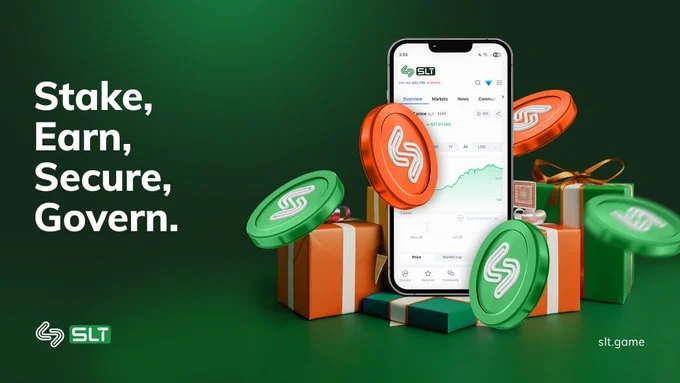
The SLT whitepaper also describes staking and governance as intended token functions. Under the proposed staking model, holders lock tokens through a designated mechanism to become eligible for rewards or other benefits. The documentation describes longer staking periods as potentially offering higher rewards, alongside a connection between staking and governance participation.
Governance is intended to give token holders a role in decisions concerning platform development, proposed upgrades, and ecosystem features. In practice, the scope of these rights depends on the governance mechanisms that are actually implemented, including voting eligibility, proposal procedures, and any associated restrictions.
Staking should not be confused with guaranteed passive income. Rewards depend on the implemented program and its funding, while locking tokens can limit liquidity and expose holders to market-price fluctuations.
Token Utility, Availability, and Value Risks
SLT’s proposed utilities are designed to connect payments, performance incentives, and ecosystem participation. Yet announced features do not automatically create immediate demand or establish a token’s economic value.
Before using SLT, participants should verify the current availability of rewards, payment integrations, staking contracts, and governance functions through project information. They should also review applicable fees, eligibility rules, token distribution details, and smart-contract risks.
SLT’s long-term utility will depend on whether its planned services become operational and attract sustained use from logistics businesses, professionals, and other participants. Rewards are not guaranteed, staking returns are not assured, and the token’s market value can fluctuate. Its practical significance will be determined by demonstrated adoption rather than the number of utilities described in its documentation.
SLT presents a logistics-focused vision that combines blockchain technology, gamification, and token-based incentives to encourage more transparent, efficient, and sustainable supply chain operations. Its proposed applications include performance rewards, route optimization, logistics payments, staking, and governance. However, the project’s long-term relevance will depend on delivering usable platform features, establishing real-world partnerships, and demonstrating that its incentives produce measurable improvements. Readers should verify current development progress, tokenomics, contract information, and available services before concluding the ecosystem.
The world of digital assets, NFTs, and blockchain gaming is exploding! 🔥 But with high fees and slow transactions on traditional blockchains, gamers and collectors need a faster, more efficient solution. That’s where Worldwide Asset eXchange (WAX) comes in!
[…] buying, selling, and trading of virtual items, particularly non-fungible tokens (NFTs) and digital assets within the gaming industry. Launched to address the unique demands of digital collectibles and virtual goods, WAX offers a […]