
Krogan KRO: Play-to-Earn NFT Gaming Ecosystem

Table of Contents

What happens when blockchain gaming moves beyond a single NFT collection? Krogan KRO combines gaming, NFTs, and token-based participation into an interstellar ecosystem centered around the Krogan universe. The project is built around a multiplayer play-to-earn game in which players use unique NFT spaceships while exploring a universe filled with different species, planets, and battles.
But the Krogan ecosystem goes beyond gameplay. Its broader design incorporates an NFT marketplace, a launchpad, and a collection of 10,000 NFTs, creating several connected components around the core gaming experience. KRO also has utility within the ecosystem, including staking and participation in Faction Decentralized Autonomous Organization (DAO) voting.
For more insights and updates on the latest cryptocurrency trends, be sure to check out our Nifty Finances platform, your gateway to smarter financial decisions in the digital economy.

What Is Krogan KRO?
Krogan is a blockchain-based multiplayer gaming ecosystem built around an interstellar universe where players can compete, collaborate, explore, and participate in a digital economy. The project combines gaming mechanics with blockchain technology, NFTs, and decentralized participation to create an experience that extends beyond a conventional video game. Its central concept revolves around a universe populated by different species, planets, factions, and interstellar conflicts, giving players multiple ways to interact with the Krogan world.
At the center of this ecosystem is KRO, the native token designed to support the game’s economy and player participation. Rather than functioning only as a cryptocurrency, KRO is integrated into different aspects of the Krogan ecosystem, including in-game activities, staking, governance, and marketplace transactions. The project’s documentation describes KRO as a community-owned token within a simulated economy where players compete for resources and influence across the universe.
The Krogan Interstellar Universe
The Krogan universe is built around the concept of interstellar competition. The game’s setting includes multiple galaxies and factions, with players working together or competing against other groups for control and resources. The ecosystem’s faction structure adds a social and strategic layer to the gameplay.
According to the Krogan documentation, the game is divided into 10 factions, with each faction associated with its own galaxy. Players can participate in faction activities and work collectively toward common objectives. This structure means that progression is not limited to individual gameplay; cooperation and collective decision-making are also important parts of the experience.
The broader Krogan concept includes activities such as:
- Interstellar battles and competition.
- Exploration of planets and galaxies.
- Resource-related activities.
- Creating companies and crafting items.
- Building and defending faction territories.
- Participating in faction decisions.
These mechanics help transform the game into a broader virtual economy rather than a simple competitive experience.
KRO as the Native Ecosystem Token
KRO serves as the native token of the Krogan ecosystem. The token is designed to support economic activity throughout the game while also providing opportunities for community participation.
Players can use KRO as an in-game currency for activities such as trading and upgrading items, creating companies, and participating in planetary colonization. Factions can also use KRO for activities connected with territory expansion, defense, and technological development.
KRO also has governance and staking functions. Users can stake the token to participate in voting related to faction decentralized autonomous organizations, creating a connection between token ownership and decision-making within the game.
Gaming, NFTs, and Decentralized Participation
NFTs form another important component of the Krogan ecosystem. The project originally positioned players as owners of unique NFT spaceships, connecting digital collectibles with gameplay and the broader interstellar universe. External descriptions of the project also identify a collection of 10,000 NFTs as part of the ecosystem.
This model gives blockchain assets a functional role within the gaming environment. Rather than treating NFTs solely as collectibles, the Krogan concept connects them with player experiences, staking, and participation in the game’s economy.
Blockchain infrastructure can therefore provide the ownership and transaction layer, while the game itself supplies the utility and entertainment experience.
Factions and Community Governance
One of Krogan’s distinctive features is its faction system. Each faction operates as a decentralized organization where members collectively make decisions instead of relying on a single central leader.
Players can propose and vote on faction decisions, while faction economies can support activities such as acquiring defensive items and developing technologies. Companies can also participate by producing and selling items to factions.
This structure connects gameplay with decentralized governance. Players are not simply participants in battles; they can also contribute to the development and direction of their faction.
The Broader Krogan Ecosystem
The core game is supported by additional components designed to expand the project’s blockchain gaming environment. These have included an NFT marketplace, a launchpad, and the Krogan NFT collection.
The marketplace concept provides an environment for trading blockchain-based assets, while the launchpad is intended to connect the wider ecosystem with token and project launches. Together, these components extend Krogan beyond a single game and create additional points of interaction for its community.
Krogan KRO is a blockchain-based multiplayer gaming ecosystem centered on an interstellar universe of factions, planets, NFTs, and competitive gameplay. KRO functions as the native economic and governance token, supporting in-game activities, staking, marketplace transactions, and faction participation. By combining gaming with NFT ownership and decentralized governance, Krogan aims to create an interconnected digital environment where players can influence both their individual progression and the wider development of the game world.
The Krogan Metaverse and Interstellar Gameplay
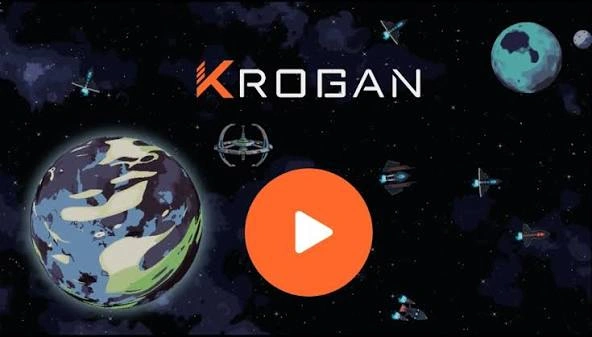
The Krogan universe is built around a science-fiction setting where blockchain gaming meets interstellar exploration, competition, and digital ownership. Rather than presenting players with a conventional fantasy environment, Krogan places them in a broader cosmic world populated by different species, planets, factions, and spaceships. This setting provides the foundation for a multiplayer experience in which players can compete for resources, participate in faction activities, and develop their position within the wider ecosystem.
A major part of the Krogan concept is the connection between gameplay and blockchain-based ownership. NFT spaceships are designed to give players digital assets that can be connected to their participation in the Krogan universe. This creates a relationship between collectible ownership and gameplay, allowing blockchain assets to become part of the game’s wider economy.
Exploring the Krogan Science-Fiction Universe
Krogan’s setting centers on an interstellar universe where multiple factions compete for influence and resources. The project describes a world divided into different galaxies, with factions representing communities of players operating within the broader game environment.
The science-fiction setting provides opportunities for players to experience more than straightforward battles. Exploration, resource management, faction development, and economic activity can all contribute to progression.
The universe is therefore designed as a persistent digital environment where player activity can influence the development of different parts of the game world.
NFT Spaceships and Digital Ownership
NFT spaceships are one of the key blockchain elements connected to the Krogan experience. These blockchain-based assets represent spaceships within the game’s universe and provide players with a form of verifiable digital ownership.
Instead of a spaceship existing only as an item stored inside a traditional game database, an NFT can be represented as a blockchain asset. This creates the possibility of ownership, trading, and interaction with the broader digital economy.
The concept connects three elements:
- Gameplay, through spaceships used within the Krogan universe.
- NFT ownership, through blockchain-based digital assets.
- Market participation, through the ability to interact with a broader ecosystem.
This model reflects the broader Web3 gaming concept of giving players greater ownership over certain digital assets associated with their gaming experiences.
Species, Planets, and Interstellar Battles
The Krogan universe is designed around a variety of species, planets, and factions. These elements help create a setting where players can participate in an ongoing interstellar conflict rather than simply playing isolated matches.
Different factions operate within their own parts of the universe and can compete over resources and territory. Players can contribute to these collective objectives while also pursuing their own progression.
Interstellar battles provide the competitive foundation of the experience. Players and factions can participate in conflicts that connect individual gameplay with larger strategic objectives.
This combination of individual and group activity can make the game world feel more dynamic, as actions can contribute to the development of a wider faction or territory.
Multiplayer Interaction and Competition
Multiplayer interaction is central to the Krogan concept. Players are not isolated from one another; instead, they participate in an ecosystem where cooperation and competition coexist.
Players can join factions, interact with other participants, trade assets, and contribute to collective activities. Competition can take place through battles and resource-related activities, while cooperation can occur through faction development and shared objectives.
The faction structure adds a social layer to the game. Instead of measuring progress solely through individual achievements, players can also contribute to the success of their broader community.
This approach can encourage players to build longer-term relationships with factions and other members of the Krogan ecosystem.
Blockchain Ownership and Gaming
The broader vision behind Krogan is connected to the idea that blockchain technology can introduce new forms of ownership into gaming.
Traditional games generally keep most digital assets within the developer’s centralized infrastructure. Players may be able to use an item in the game, but their ability to transfer or trade that item outside the game’s systems can be limited.
Blockchain-based assets offer a different model. NFTs can provide verifiable ownership records that exist on a blockchain, allowing compatible digital assets to become part of a broader Web3 ecosystem.
For Krogan, this concept is applied to spaceships and other components of its digital economy. Blockchain ownership can therefore complement the entertainment and competitive elements of the game.
A Connected Interstellar Economy
Krogan’s metaverse concept extends beyond battles. Its ecosystem incorporates economic activities such as trading, crafting, resource management, and faction development. These systems can create reasons for players to interact even when they are not directly engaged in combat.
The combination of gameplay and blockchain assets creates a connected environment where players can participate in different ways. Some may focus on competition, while others may be more interested in collecting, trading, or supporting their faction.
This variety is an important part of the project’s broader metaverse vision.
The Krogan metaverse combines a science-fiction universe with multiplayer gameplay and blockchain-based digital ownership. Players can interact with NFT spaceships while exploring a world involving different species, planets, factions, and interstellar battles. By connecting competitive gaming, social interaction, and blockchain assets, Krogan aims to create an interconnected digital environment where gameplay and ownership become parts of the same ecosystem.

Play-to-Earn Mechanics and Blockchain Gaming
Krogan is designed around the idea of combining multiplayer gaming with blockchain-based ownership and an in-game economy. As a Web3 gaming project, its model connects player activity with digital assets, NFTs, and the KRO token. This creates an environment where gameplay can extend beyond entertainment by allowing players to participate in an economy built around collectible assets and blockchain-based transactions.
The play-to-earn concept associated with Krogan reflects a broader shift in gaming, where players can potentially receive economic value from participating in a digital ecosystem. Instead of keeping every game asset entirely within a centralized database, blockchain technology can provide verifiable ownership of selected digital items. In Krogan’s case, this concept is connected to NFT spaceships and the wider KRO-powered ecosystem.
Understanding Play-to-Earn in Krogan
Play-to-earn generally refers to game systems where players can receive digital assets or tokens through gameplay and participation. These assets may have utility within the game or be transferable within a broader blockchain ecosystem.
Krogan applies this concept through an interstellar gaming environment where players can participate in different activities while interacting with blockchain-based assets.
The model can connect:
- Player participation.
- NFT ownership.
- In-game economic activity.
- KRO token utility.
- Trading and digital asset interactions.
The objective is to create a gaming environment where participation can have an economic dimension without separating blockchain functionality from the actual game experience.
Gameplay and Blockchain-Based Assets
Blockchain assets can play a different role from conventional game items. In a traditional game, a spaceship, character, or other collectible is generally controlled by the game’s central database. Players may use the asset, but ownership and transfer are ultimately determined by the game operator.
Krogan’s use of NFTs introduces blockchain ownership into this model. NFT spaceships can be represented as blockchain assets, providing a verifiable record associated with the digital item.
This can allow players to interact with assets through a broader Web3 environment, depending on the functionality supported by the ecosystem.
The connection between gameplay and blockchain assets means that digital ownership becomes part of the game’s economic structure rather than simply an external feature.
Player Activity, NFTs, and KRO Utility
Player activity is connected to Krogan’s wider digital economy. NFTs can represent collectible or functional assets, while KRO provides the ecosystem with a native token that can be used across different activities.
The relationship can be viewed through three layers.
Gameplay provides the activities that keep players engaged with the universe. NFTs provide blockchain-based digital assets that can be connected to those experiences. KRO provides the economic layer used for supported transactions, activities, staking, and other ecosystem functions.
This structure allows different forms of participation to interact within one environment.
Missions and Resource-Based Gameplay
Krogan’s game design includes an interstellar setting where players can participate in activities involving exploration, resources, factions, and competition. These systems provide opportunities for players to develop their position within the game universe.
Resource-related gameplay can be particularly important in a blockchain gaming economy because resources can create demand for player activity. Players may participate in activities associated with gathering or managing resources before using them for other purposes within the ecosystem.
The broader game concept also includes companies, crafting, and faction development, creating an economy in which different participants can specialize in different activities.
Crafting and NFT Upgrades
Crafting can add another layer to the relationship between gameplay and digital assets. In a game economy, crafting allows players to transform resources or materials into useful items.
Within a blockchain-based environment, certain assets may also be represented as NFTs, creating the possibility of verifiable ownership and marketplace interaction.
NFT upgrades can similarly connect gameplay progression with blockchain assets. However, the exact functionality of individual NFTs and upgrades depends on the features implemented by the project and should not be confused with a guarantee of financial returns.
The important distinction is that blockchain can provide an ownership layer for digital assets while the game’s mechanics determine how those assets are actually used.
How Blockchain Gaming Differs From Traditional Games
Traditional gaming generally places ownership and economic activity under the control of the game developer. Items are stored within centralized databases, and players typically cannot freely transfer them outside the game’s ecosystem.
Blockchain gaming introduces another approach by representing selected assets on a decentralized ledger. This can provide:
- Verifiable digital ownership.
- Transferable blockchain assets.
- Player participation in digital economies.
- Transparent transaction histories.
- Potential interoperability with compatible Web3 services.
For Krogan, this model connects the game’s interstellar setting with NFTs and token-based economic activity.
The Role of Economic Participation
Play-to-earn systems are not simply about distributing tokens for playing. Sustainable blockchain gaming economies need meaningful gameplay, useful assets, and balanced economic incentives.
Krogan’s ecosystem combines gaming activities with an economy involving NFTs, KRO, factions, resources, and marketplace interactions. This creates multiple ways for participants to engage with the project rather than relying on a single reward mechanism.
Players can therefore approach the ecosystem from different perspectives, including gaming, collecting, trading, faction participation, or economic activity.
Krogan’s play-to-earn concept connects multiplayer gameplay with blockchain-based assets and token utility. Players can participate in an interstellar gaming environment involving resources, crafting, factions, missions, and NFT-related activities, while KRO provides an economic layer across the ecosystem. By introducing blockchain ownership, Krogan offers an alternative to traditional gaming models in which digital assets remain entirely within a centralized game environment. The result is a gaming framework where entertainment, participation, and digital ownership are closely connected.
Krogan KRO brings together several elements of Web3 gaming within a single interstellar ecosystem. At its center is a multiplayer play-to-earn game built around NFT spaceships, different species, planets, and battles. Around that gaming experience, the project has developed additional components including an NFT marketplace, a launchpad, and a collection of digital collectibles.
KRO adds an economic and participatory layer to the ecosystem. The token can be staked and is associated with voting participation in Faction DAOs, giving the asset utility beyond simply serving as a tradable cryptocurrency.
The blockchain gaming industry continues to evolve rapidly, blending immersive gameplay with real economic incentives—and Monsterra MSTR stands out as one of the most ambitious Play-to-Earn ecosystems in this space. Built as a multi-chain NFT game, Monsterra combines farming, land development, and strategic battles into a single expansive universe powered by blockchain technology.
For crypto and blockchain gaming readers, understanding the relationship between KRO, NFT spaceships, gameplay, staking, governance, and the wider Krogan ecosystem is essential. Rather than evaluating KRO in isolation, readers should examine how these interconnected components contribute to the project’s overall gaming and Web3 vision. Before participating, review the official Krogan resources and current project information carefully.
[…] to evolve rapidly, blending immersive gameplay with real economic incentives—and Monsterra MSTR stands out as one of the most ambitious Play-to-Earn ecosystems in this space. Built as a multi-chain NFT game, Monsterra combines farming, land development, and […]
[…] happens when blockchain gaming moves beyond a single NFT collection? Krogan KRO combines gaming, NFTs, and token-based participation into an interstellar ecosystem centered around …. The project is built around a multiplayer play-to-earn game in which players use unique NFT […]