
How to Add Liquidity to QuickSwap

Table of Contents
QuickSwap is a decentralized exchange (DEX) built on the Polygon blockchain that allows users to supply token pairs into liquidity pools. These pools help power token swaps across the platform. Many beginners interested in decentralized finance (DeFi) want to understand how liquidity provision works before depositing funds. This article is for informational purposes and does not constitute financial advice. Before participating in DeFi protocols, always Do Your Own Research (DYOR) and understand the associated risks.
For more insights and updates on the latest cryptocurrency trends, be sure to check out our Nifty Finances platform, your gateway to smarter financial decisions in the digital economy.
What Is QuickSwap?
QuickSwap is a decentralized exchange operating on the Polygon network. It enables users to trade cryptocurrencies directly from self-custody wallets without using a centralized intermediary.
Instead of matching buyers and sellers through traditional order books, QuickSwap uses liquidity pools funded by users. These pools supply the tokens needed to execute swaps automatically.
QuickSwap supports several DeFi activities, including:
- Token swaps
- Liquidity provision
- Yield farming
- Reward programs
Because the platform is decentralized, users maintain control of their wallet and private keys.
How to Add Liquidity to QuickSwap
Adding liquidity to QuickSwap involves depositing two cryptocurrencies into a shared pool that traders use for swaps. In return, liquidity providers may receive a share of trading fees and, in some cases, additional incentives depending on the pool.
Before getting started, users should understand that liquidity provision carries risks, including price volatility and impermanent loss. It is important to know how the pool works, what tokens are required, and what fees apply.
Liquidity providers should also verify token contract addresses carefully to avoid depositing into fraudulent or incorrect pools.
How Liquidity Pools Work
Liquidity pools are smart contract-based pools containing two different tokens.
To provide liquidity, users deposit two tokens of equal value into a pool. For example, if a user wants to join a MATIC/USDC pool, they must supply equal dollar values of both assets.
QuickSwap uses an automated market maker (AMM) model. AMMs use mathematical formulas to determine token prices based on the ratio of assets inside the pool.
When traders swap tokens, they pay trading fees. A portion of these fees may be distributed to liquidity providers.
However, changes in token prices can create impermanent loss, which may reduce returns compared with simply holding the assets.
Set Up a Compatible Wallet
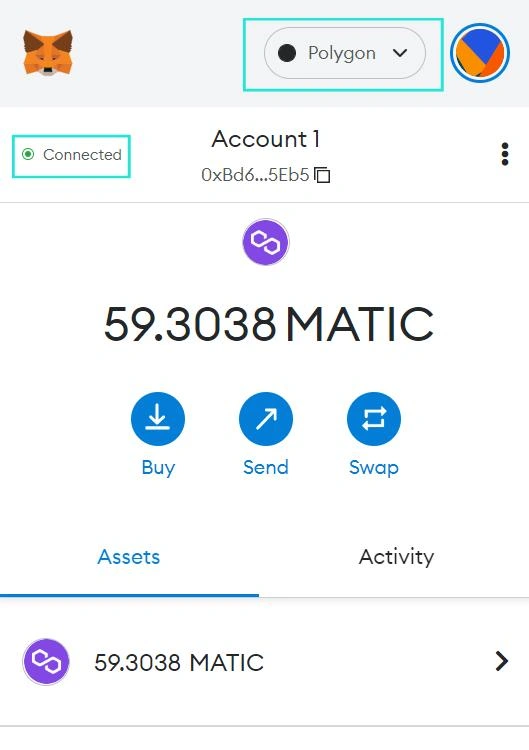
To use QuickSwap, users need a Polygon-compatible Web3 wallet.
Popular options include MetaMask and other wallets supporting Polygon. Hardware wallets can provide additional security.
Setting up a wallet usually involves:
- Installing wallet software or hardware
- Creating a wallet address
- Saving the recovery phrase securely
- Protecting private keys offline
Recovery phrases and private keys should never be shared with anyone.
Fund Your Wallet With Token Pairs and MATIC
Before adding liquidity, users must hold both required tokens in their wallet.
For example, joining a pool may require assets such as MATIC paired with stablecoins or other supported tokens.
Users can obtain tokens by:
- Buying them on exchanges such as Coinbase or Binance
- Swapping tokens within DeFi
- Bridging assets from another blockchain
Users also need extra MATIC to pay Polygon gas fees for approvals and liquidity transactions.
Connect Your Wallet to QuickSwap
Once the wallet is funded, users can connect it to QuickSwap.
The general process includes:
- Visit the official QuickSwap website
- Verify the URL carefully
- Click Connect Wallet
- Select your wallet provider
- Approve the connection request
Always verify the website to avoid phishing scams.
Add Liquidity to a Pool
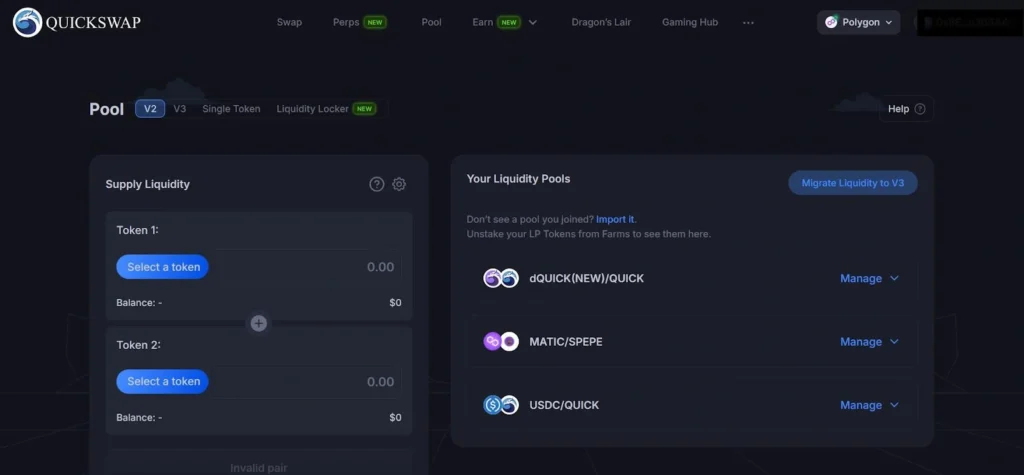
After connecting, users can add liquidity.
The typical steps are:
- Open the Liquidity section
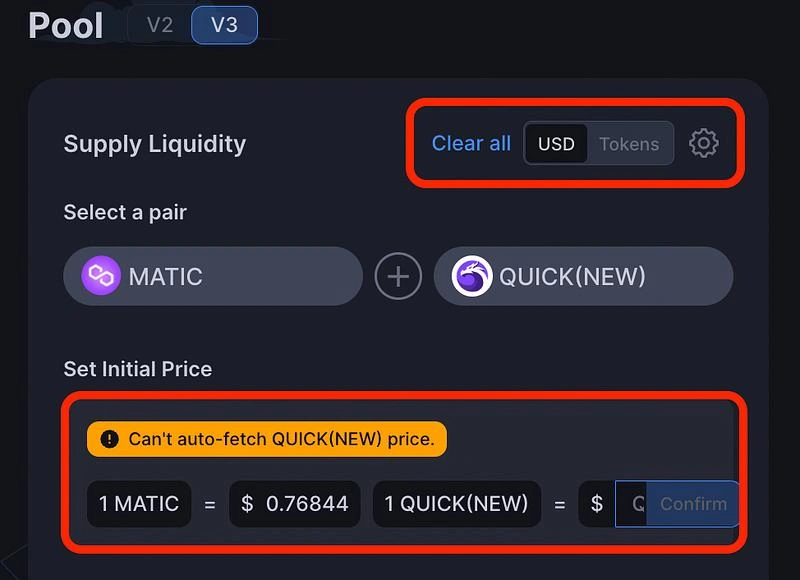
- Select a token pair
- Enter the deposit amount
- Review the required matching amount for the second token
- Approve token spending in the wallet
- Review pool share details
- Confirm the transaction
Once confirmed on-chain, the liquidity is deposited into the pool.
Understand LP Tokens and Rewards
After depositing funds, users receive LP (liquidity provider) tokens.
LP tokens represent the user’s ownership share in the liquidity pool and can be redeemed later when withdrawing liquidity.
Depending on the pool, liquidity providers may earn:
- Trading fee rewards
- Farming incentives
- Additional protocol rewards
Returns vary depending on trading volume and pool activity.
Adding liquidity to QuickSwap involves preparing a Polygon-compatible wallet, funding it with a token pair and MATIC, connecting to the platform, and depositing assets into a liquidity pool. While liquidity provision can generate trading fee rewards, users should understand impermanent loss, token volatility, and smart contract risks before participating.
Before depositing assets into any liquidity pool, research independently, verify token details, and understand the risks involved. As always, Do Your Own Research (DYOR).