
Highstreet HIGH: Blockchain Metaverse Gaming

Table of Contents
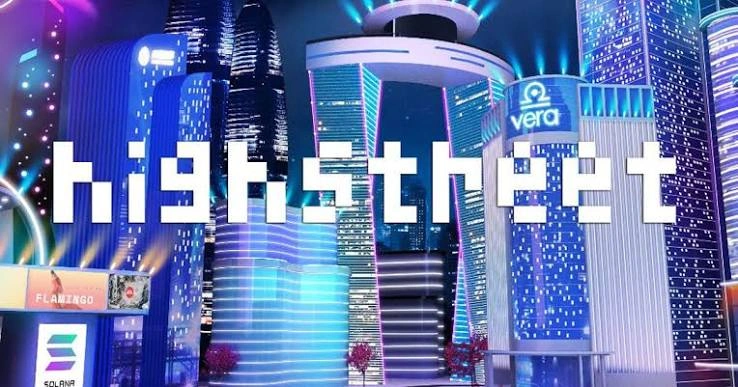
What if a virtual world could be more than a place to play games? Highstreet HIGH brings gaming, retail, social interaction, and digital ownership together through Highstreet World, a multifaceted metaverse designed around exploration and new digital experiences. The project combines the entertainment of an online world with blockchain-based assets, allowing users to participate in an economy where virtual experiences and commerce intersect.
Its Marketplace gives users access to in-game items and phygital products connected to both digital and real-life experiences. Highstreet also introduces virtual real estate through Highstreet Homes, giving users a way to own and personalize their metaverse spaces. At the center of this ecosystem is HIGH, which is the in-game currency of Highstreet World and a means of purchasing assets. By bringing gaming, commerce, and ownership together, Highstreet offers an alternative vision for how blockchain technology can shape the future of virtual worlds.
For more insights and updates on the latest cryptocurrency trends, be sure to check out our Nifty Finances platform, your gateway to smarter financial decisions in the digital economy.
What Is Highstreet HIGH?
Highstreet is a blockchain-based metaverse that combines gaming, retail, virtual experiences, and digital ownership into a single ecosystem. The project describes Highstreet World as a place where the real and digital worlds come together, allowing users to explore virtual environments, interact with brands, acquire digital assets, and participate in an evolving game economy. Its broader vision is to create a “digital living” experience in which gaming and commerce are connected rather than operating as completely separate activities.
At the center of this ecosystem is HIGH, the primary token associated with Highstreet World. The document explicitly describes HIGH as the in-game currency of the Highstreet World ecosystem. Users can acquire HIGH through cryptocurrency exchanges and use it to purchase certain assets within the Highstreet economy. This makes HIGH more than simply a tradable crypto asset; it is designed to have utility within Highstreet’s virtual economy.
Highstreet World and the HIGH Token
Highstreet World provides the virtual environment in which the HIGH token can be used. The project’s tokenomics page explains that HIGH has several roles within the ecosystem, including purchasing products through its marketplace and buying real estate in Highstreet World. The token is also connected to governance and certain economic activities associated with virtual properties.
The relationship between the game and HIGH therefore works through an in-game economy. Players can use the token to acquire assets and participate in parts of the virtual world, while the wider Highstreet marketplace connects digital items with physical products.
Combining Retail With Gaming
A defining characteristic of Highstreet is its attempt to merge retail and gaming. Rather than treating shopping as something separate from gameplay, Highstreet incorporates branded products, virtual items, homes, and marketplace activities into its metaverse.
This approach is sometimes described through the concept of phygital products, where physical and digital components are connected. Highstreet’s marketplace allows certain product tokens to be redeemed for physical goods and NFTs, with the resulting NFT capable of having utility inside Highstreet World.
Blockchain and Digital Ownership
Blockchain technology provides the infrastructure for representing certain digital assets as tokens or NFTs. This can give users blockchain-based records associated with their assets and allow some items to exist beyond a simple in-game database.
Highstreet uses this model for products that can have physical, NFT, and metaverse components. Once a qualifying product token is redeemed, Highstreet states that the token is burned and a unique NFT is minted, which can then be used within the virtual world.
HIGH Within the Highstreet Economy
HIGH is therefore best understood as the primary in-game currency of Highstreet World, while the broader Highstreet ecosystem contains additional assets and currencies. The project’s tokenomics page distinguishes HIGH from STREET, describing HIGH as having a fixed supply of 100 million tokens, while STREET functions as an inflationary in-game utility currency earned through gameplay.
This distinction is important for understanding Highstreet’s economy. HIGH provides access to important ecosystem functions such as marketplace purchases and virtual real estate, while gameplay and everyday in-game commerce can involve STREET. Together, these components support Highstreet’s goal of connecting blockchain-based ownership, gaming, and retail within one metaverse economy.
Highstreet Marketplace and Phygital Products
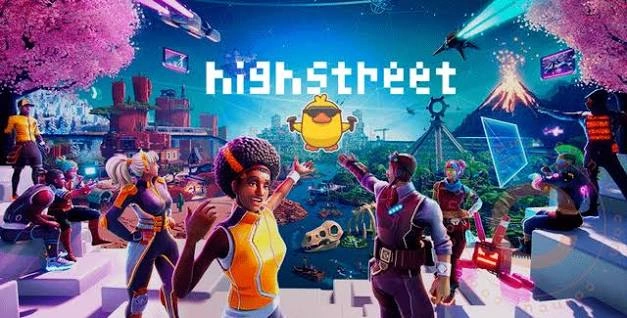
The Highstreet Marketplace is a core part of the Highstreet ecosystem, connecting the project’s virtual world with digital items and real-world products. It describes the marketplace as a place where users can discover in-game items designed to enhance the Highstreet experience, alongside exclusive phygital products that connect digital and real-life experiences. This makes the marketplace more than a conventional shop for virtual goods. It is designed to support Highstreet’s broader goal of blending retail with gaming inside its metaverse.
In-Game Items and the Highstreet Experience
Within Highstreet World, digital assets can have practical uses inside the virtual environment. The marketplace allows users to discover items intended to enhance their experience, while other parts of the ecosystem focus on virtual real estate and personalization. For example, Highstreet Homes allows users to own and customize virtual properties, showing how blockchain-based assets can become part of a user’s identity and activities within the metaverse.
These items can serve purposes beyond simple digital collectibles. According to Highstreet’s StreetSmart™ documentation, NFTs created through its phygital products can have metaverse utility, including use as in-game items for styling avatars or decorating Highstreet Homes. This gives certain blockchain assets a functional role within the game rather than treating them solely as items to collect or trade.
What Are Phygital Products?
Highstreet uses the term phygital to describe assets that combine physical and digital components. Its StreetSmart™ Drops documentation explains that a phygital asset can include both a digital in-game item and a real-life physical product. The process begins with a product token that acts as a voucher for the physical item and associated NFT.
This creates several connected stages:
- Product token: The initial blockchain-based token represents access to the product.
- Physical product: Users can redeem the token for the associated real-world item.
- NFT: Redemption burns the product token and results in a newly minted NFT with metaverse utility.
- In-game utility: The NFT can subsequently be used within Highstreet World.
The documentation states that product tokens can also be used within Highstreet World before redemption, giving the digital asset utility even before the physical component is claimed.
Connecting Digital Assets With Real Life
This model creates a direct relationship between blockchain ownership and real-world experiences. Instead of an NFT existing only as a digital collectible, a qualifying Highstreet product can connect ownership to a physical item and an in-game asset.
The physical component is redeemed by providing shipping information, while the digital component becomes an NFT after the product token is burned. Highstreet states that the resulting NFT can be viewed in the user’s inventory and used within Highstreet World.
Expanding Blockchain’s Role in Retail
Integrating retail into a metaverse expands the potential utility of blockchain assets. Blockchain can provide the tokenized infrastructure for representing products, transfers, redemption, and digital ownership, while the metaverse provides an environment where those assets can have additional uses.
Highstreet’s approach therefore connects retail, gaming, NFTs, and physical products within one ecosystem. The marketplace demonstrates how blockchain assets can potentially move beyond purely financial or collectible functions and become part of interactive digital experiences. For Highstreet, phygital products are one way of linking the virtual economy of Highstreet World with real-world commerce.

Highstreet Homes and Virtual Real Estate
Highstreet Homes represent the virtual real estate component of the Highstreet ecosystem. Within Highstreet World, Homes give users a dedicated digital space that they can personalize and use as part of their broader metaverse experience. Highstreet describes Homes as a way to “own and personalize” the metaverse experience, making virtual real estate an important part of how users can establish a presence within its blockchain-based world.
Owning Property in Highstreet World
Virtual real estate refers to digital properties that exist within a metaverse rather than in the physical world. In Highstreet, Homes are presented as assets associated with different regions of Highstreet World. The marketplace currently categorizes Homes alongside other ecosystem assets, with examples including properties in Highstreet City, Binance Beach, and Ava Alps.
This gives users an opportunity to have a defined location within the virtual environment rather than interacting with the metaverse only as visitors or players. Ownership of a Home can therefore become part of a user’s longer-term relationship with Highstreet World.
Personalizing the Metaverse Experience
One of the main purposes of Highstreet Homes is personalization. The marketplace describes Homes as personal spaces that users can customize, invite friends to, and potentially earn rewards from through economic activity. This gives virtual property a functional role within the ecosystem instead of treating it solely as a collectible.
Personalization can make a virtual property feel more closely connected to its owner. Furniture, collectibles, pets, and other digital assets can contribute to how a user presents and uses their space. Highstreet’s ecosystem also includes digital items that can be used to enhance the player’s experience, creating opportunities for Homes to become part of broader gameplay and social activities.
The project has also discussed virtual properties in connection with pets and other interactive assets. Its official materials, for example, have highlighted Baby Drakes that can exist within Highstreet Homes, demonstrating how a property can function as more than a static digital location.
Virtual Property and Digital Identity
A virtual Home can become an extension of a user’s digital identity. In a conventional game, a player’s living space may exist entirely within the game’s database. In a blockchain-based environment, however, certain assets can be represented as NFTs, allowing ownership records to exist on a blockchain.
Highstreet’s approach combines this ownership concept with an interactive metaverse. A Home can represent where a user chooses to establish themselves, how they customize their environment, and which assets they display or use. The property can therefore become part of the user’s activities and social presence within Highstreet World.
Why Virtual Ownership Matters
Blockchain-based ownership is important to metaverse projects because it can provide a different model for handling digital property. Instead of virtual assets being limited to a conventional centralized game account, blockchain technology can represent qualifying assets as transferable digital tokens.
Virtual real estate is part of a wider economy connecting gaming, retail, NFTs, and digital ownership. Homes provide users with persistent spaces inside that economy, while other assets can add functionality and personalization.
Virtual ownership does not automatically guarantee that an asset will retain financial value. Its practical importance depends on how the underlying metaverse develops, what utilities are supported, and how users interact with the ecosystem. Nevertheless, Highstreet Homes demonstrates how blockchain technology can turn virtual property from a simple game feature into an ownership-based component of a broader digital world.
The Role of HIGH in the Highstreet Ecosystem
HIGH is the primary in-game currency of the Highstreet World ecosystem. Highstreet places HIGH at the center of its blockchain-based economy, describing it as the currency users can obtain through cryptocurrency exchanges and use to purchase assets within the virtual world. This gives HIGH a practical role within Highstreet rather than limiting it to being a cryptocurrency traded independently of the project’s gaming ecosystem.
HIGH as Highstreet World Currency
Highstreet World uses two primary currencies, HIGH and STREET, but they serve different purposes. HIGH has a fixed maximum supply of 100 million tokens, while STREET is described by Highstreet as an inflationary in-game currency that can be earned through gameplay. HIGH is associated with major ecosystem activities such as marketplace purchases, virtual real-estate transactions, and governance.
This distinction is important because HIGH is not simply the everyday currency used for every in-game transaction. Highstreet describes STREET as its main utility currency for activities such as commerce with NPC vendors, player-to-player trading, and certain gameplay-related expenses. HIGH instead plays a more strategic role in accessing specific assets and components of the Highstreet economy.
Acquiring HIGH Through Exchanges
Users can acquire HIGH through supported cryptocurrency exchanges. Highstreet’s official tokenomics page currently identifies Uniswap, PancakeSwap, and Binance as places where HIGH is available. The project’s main website likewise instructs users to get HIGH on exchanges to purchase assets within Highstreet World.
The exact process for obtaining HIGH depends on the exchange and blockchain network being used. Users should therefore verify the correct token contract, supported network, trading pair, and transaction fees before purchasing or transferring HIGH.
Purchasing Assets Within Highstreet
HIGH has direct utility for acquiring assets associated with the Highstreet ecosystem. The project’s tokenomics information states that HIGH can be used to purchase products through its limited-edition marketplace and for real-estate purchases in Highstreet World. This connects the token directly with the project’s virtual economy and digital-ownership model.
Highstreet’s StreetSmart™ Drops provide another example. The official documentation states that product tokens can be purchased using HIGH, with Ethereum and BNB Chain versions supported for the relevant transactions. These product tokens can represent access to physical products and NFTs with metaverse utility.
HIGH and the Virtual Economy
The role of HIGH extends beyond individual purchases. Highstreet states that property owners can receive certain taxes collected from their residences in HIGH and that acquiring HIGH provides access to governance participation. This positions the token as part of the economic and governance infrastructure surrounding virtual property.
The marketplace further connects HIGH with Highstreet’s retail-focused metaverse by allowing users to use the token for digital and phygital products. As a result, HIGH can function as a bridge between blockchain assets, virtual real estate, gaming activities, and retail experiences.
Utility vs. Speculative Value
It is important to separate HIGH’s utility from its market value. Utility describes what the token can be used for inside the Highstreet ecosystem, such as purchasing certain assets, participating in governance, or interacting with marketplace products. Market value, meanwhile, is determined by supply, demand, trading activity, sentiment, and broader cryptocurrency-market conditions.
Having utility does not guarantee that HIGH will increase in price or retain a particular market value. Users evaluating HIGH should therefore consider both its intended function within Highstreet World and the risks associated with owning a publicly traded crypto asset.
Highstreet HIGH represents a blockchain-based approach to the metaverse that brings together gaming, retail, social interaction, virtual real estate, and digital ownership. Rather than presenting Highstreet World simply as a virtual gaming environment, the project creates a broader ecosystem where users can explore, interact with others, acquire digital assets, and participate in a marketplace. Its Marketplace connects in-game items with phygital products, while Highstreet Homes introduces virtual real estate that users can own and personalize. HIGH plays an important role in this economy as the in-game currency used to purchase assets within Highstreet World.
The metaverse isn’t just the future—it’s already here. And Jot Art (JOT) is one of the pioneers making it real! Built as a Web3 multiverse gaming platform, Jot Art fuses blockchain, NFTs, and decentralized worlds into a single immersive experience. Think of it as a multiverse where gamers aren’t just players—they’re creators, investors, and decision-makers.
For anyone researching the project, understanding these different components provides a clearer picture of what Highstreet is trying to build. HIGH should not be evaluated solely by its market price. Users should also consider the token’s utility, ecosystem activity, digital-asset demand, virtual real-estate model, and broader adoption. As with any cryptocurrency project, careful research and risk assessment remain essential before participating in the Highstreet ecosystem.
[…] if a virtual world could be more than a place to play games? Highstreet HIGH brings gaming, retail, social interaction, and digital ownership together through Highstreet World, a multifaceted metaverse designed around exploration and new […]