
EdgeAI: Intelligent Data Chain for Edge AI

Table of Contents

Artificial intelligence is only as powerful as the data behind it—but what happens when that data is generated far from centralized cloud servers? That’s where EdgeAI comes in! As billions of IoT devices continue producing massive amounts of real-time information, traditional infrastructures face growing challenges in latency, scalability, and data privacy. EdgeAI introduces a decentralized Layer 1 blockchain designed specifically for the AI era, combining edge computing, DePIN infrastructure, and privacy-preserving technologies into a unified ecosystem.
Rather than relying solely on centralized processing, EdgeAI enables intelligent data handling directly where information is created, improving efficiency while protecting sensitive data. Its innovative architecture also creates opportunities for secure data monetization and collaborative AI learning. In this guide, we’ll explore how EdgeAI works, the technologies powering its network, its unique consensus mechanism, and why it aims to become the intelligent data chain for next-generation edge AI applications.
For more insights and updates on the latest cryptocurrency trends, be sure to check out our Nifty Finances platform, your gateway to smarter financial decisions in the digital economy.
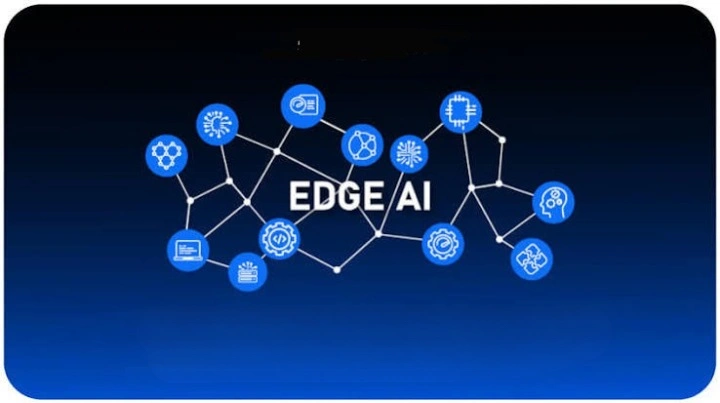
What Is EdgeAI?
Artificial intelligence is increasingly moving beyond centralized cloud servers and closer to where data is created. From smart factories and autonomous vehicles to connected sensors and industrial equipment, billions of edge devices continuously generate massive amounts of information. Processing this data efficiently requires infrastructure that can handle real-time workloads while preserving privacy and scalability. This is the challenge that EdgeAI aims to solve.
EdgeAI is a purpose-built Layer 1 blockchain designed specifically for the emerging edge AI economy. Rather than treating blockchain solely as a financial settlement layer, EdgeAI focuses on creating an intelligent decentralized data network where edge-generated data can be securely processed, validated, and exchanged. By integrating blockchain technology with artificial intelligence, the Internet of Things (IoT), and Decentralized Physical Infrastructure Networks (DePIN), EdgeAI provides the foundation for a new generation of decentralized AI applications.
EdgeAI Is a Layer 1 Blockchain Built for Edge AI
Unlike general-purpose blockchains that primarily process financial transactions or decentralized applications, EdgeAI is engineered around the unique demands of edge intelligence. Its architecture is designed to support environments where enormous amounts of data are continuously generated by distributed devices operating outside traditional cloud infrastructure.
The platform aims to provide a secure and scalable blockchain that enables devices to contribute valuable data while maintaining transparency and trust across the network. Instead of relying on centralized servers to collect and manage information, EdgeAI enables data to be processed much closer to its source.
This approach helps reduce delays, improves operational efficiency, and creates infrastructure capable of supporting AI-powered systems that depend on fast and reliable data processing. According to the project, EdgeAI combines high-performance blockchain technology with edge computing to deliver an ecosystem optimized for intelligent decentralized applications.
Creating an Intelligent Decentralized Data Network
At the heart of EdgeAI is the vision of building an intelligent decentralized data network. Modern AI models depend on vast amounts of high-quality data, yet much of today’s valuable information remains isolated across disconnected devices and proprietary systems.
EdgeAI seeks to transform this fragmented landscape by creating a decentralized environment where data contributors can securely participate while retaining greater control over their information. The network is designed to evaluate, validate, and reward valuable edge-generated data through its blockchain infrastructure.
Rather than treating data as a byproduct, EdgeAI positions it as a valuable digital asset that can support AI training, real-time analytics, and machine intelligence while encouraging broader participation across distributed networks.
Combining Blockchain, AI, IoT, and DePIN
One of EdgeAI’s defining characteristics is its integration of multiple emerging technologies into a unified ecosystem.
The platform combines:
- Blockchain to provide transparency, security, and decentralized coordination.
- Artificial Intelligence to support intelligent decision-making and machine learning applications.
- Internet of Things (IoT) devices that continuously generate real-world data.
- DePIN infrastructure to decentralize the physical network responsible for collecting and processing information.
By bringing these technologies together, EdgeAI creates an infrastructure where connected devices can securely contribute data, participate in decentralized operations, and help power AI systems without relying exclusively on centralized cloud providers.
This combination also supports new opportunities for privacy-preserving data sharing and decentralized data monetization while encouraging broader participation across the network.
Managing and Processing Distributed Edge Data
One of the primary objectives of EdgeAI is enabling efficient management of distributed edge data. Traditional cloud architectures often require information to travel long distances before it can be processed, introducing latency that limits real-time applications.
EdgeAI addresses this challenge by supporting data processing closer to where information is generated. This localized approach helps improve responsiveness while reducing bandwidth requirements and enabling faster AI inference for connected devices.
The platform also incorporates privacy-focused technologies such as federated learning and differential privacy alongside its blockchain framework. These technologies are intended to help organizations analyze and learn from distributed data while reducing the need to expose sensitive information.
Why Edge-Generated Data Needs Specialized Infrastructure
The rapid growth of connected devices means that traditional cloud infrastructure alone is becoming increasingly difficult to scale for modern AI workloads. Billions of IoT devices continuously produce streams of sensor readings, images, videos, and operational data that require immediate analysis.
Sending every piece of information to centralized data centers can create several challenges, including higher latency, increased bandwidth consumption, privacy concerns, and infrastructure bottlenecks.
Edge-generated data therefore benefits from infrastructure specifically designed to:
- Process information closer to the data source.
- Reduce network latency for real-time AI applications.
- Improve privacy through localized data handling.
- Scale efficiently across millions of distributed devices.
- Enable transparent validation and decentralized coordination.
EdgeAI’s specialized Layer 1 blockchain is designed around these requirements, providing infrastructure that supports secure, efficient, and decentralized edge intelligence rather than adapting conventional blockchain models to edge computing after the fact.
EdgeAI introduces a Layer 1 blockchain specifically built for the growing edge AI ecosystem. By combining blockchain technology, artificial intelligence, IoT connectivity, and DePIN infrastructure, the platform seeks to create an intelligent decentralized data network capable of securely processing and managing distributed edge-generated data. As AI increasingly depends on real-time information from billions of connected devices, specialized infrastructure like EdgeAI aims to provide the scalability, privacy, and efficiency needed to support the next generation of decentralized intelligent applications.

How EdgeAI Powers Decentralized Edge Intelligence
Artificial intelligence is becoming increasingly dependent on data generated outside traditional cloud environments. Smart cities, autonomous vehicles, industrial sensors, robotics, and connected consumer devices continuously produce enormous amounts of information that require immediate analysis. Relying solely on centralized cloud infrastructure can introduce delays, increase bandwidth costs, and create bottlenecks that limit the performance of AI-powered applications. EdgeAI addresses these challenges by building a Layer 1 blockchain specifically designed to support decentralized edge intelligence. By combining blockchain technology with edge computing, AI, IoT, and Decentralized Physical Infrastructure Networks (DePIN), EdgeAI provides an infrastructure that enables intelligent, secure, and efficient data processing closer to where data is created.
Understanding Edge Computing and Why It Matters for AI
Edge computing is a computing model that processes data near its source rather than sending every piece of information to distant cloud servers. As connected devices continue to multiply, this approach has become increasingly important for AI systems that rely on immediate access to fresh data.
Many AI applications, such as autonomous machines, industrial automation, healthcare monitoring, and smart transportation, cannot afford delays caused by data transmission over centralized networks. Edge computing allows these systems to analyze information locally, enabling AI models to respond faster while reducing dependence on cloud infrastructure.
EdgeAI is purpose-built around this concept, providing blockchain infrastructure that supports secure coordination and decentralized management of edge-generated intelligence.
Localized Data Processing for Greater Efficiency
One of EdgeAI’s core advantages is its focus on localized data processing. Instead of requiring every device to upload raw information to centralized servers, data can be processed much closer to where it is generated.
This localized approach offers several benefits:
- Reduces unnecessary network traffic.
- Lowers bandwidth consumption.
- Improves data privacy by limiting unnecessary transfers.
- Enables faster AI inference at the network edge.
By keeping computation closer to connected devices, EdgeAI helps organizations analyze valuable information without relying entirely on centralized cloud services. This creates a more efficient environment for AI applications that require continuous access to real-time data.
Reducing Latency for Real-Time Decision-Making
Modern AI systems often depend on instant responses. Whether monitoring industrial equipment, coordinating autonomous vehicles, or managing smart infrastructure, even small communication delays can affect overall performance.
EdgeAI supports low-latency processing by enabling data analysis near the source instead of routing every request through distant cloud data centers. This significantly reduces the time required for information to travel across networks.
Lower latency enables AI systems to make faster decisions, improving responsiveness for applications that require immediate action. As a result, organizations can deploy intelligent systems that react to changing conditions in real time while maintaining reliable performance across distributed environments.
Scaling Across Billions of Connected Devices
The number of Internet of Things (IoT) devices continues to grow rapidly, creating an unprecedented volume of edge-generated data. Traditional centralized systems often struggle to efficiently process this expanding workload.
EdgeAI is designed with scalability in mind, providing blockchain infrastructure capable of supporting decentralized coordination across large networks of connected devices. Rather than concentrating processing within a handful of centralized servers, workloads can be distributed across a decentralized ecosystem.
This architecture allows the network to accommodate increasing numbers of devices while maintaining efficient data validation, communication, and AI processing. As edge computing adoption continues to expand, scalable infrastructure becomes essential for supporting future AI-powered ecosystems.
Improving Reliability Through Decentralized Infrastructure
Centralized systems can become vulnerable to outages, bottlenecks, or single points of failure. If a central server experiences downtime, connected applications may lose access to critical services or data processing capabilities.
EdgeAI addresses this challenge through decentralized infrastructure powered by blockchain and DePIN technologies. Instead of relying on a single authority, network participants collectively contribute to data validation, infrastructure, and distributed operations.
This decentralized approach improves overall network resilience by distributing responsibilities across multiple participants. It also enhances transparency and trust through blockchain-based verification while allowing edge devices to securely contribute valuable data without depending entirely on centralized intermediaries.
As decentralized infrastructure expands, EdgeAI aims to create a more reliable foundation for AI applications that require continuous availability, secure coordination, and efficient processing across geographically distributed environments.
EdgeAI powers decentralized edge intelligence by combining edge computing, blockchain, AI, IoT, and DePIN into a unified Layer 1 ecosystem. Through localized data processing, reduced latency, scalable infrastructure, and decentralized network coordination, the platform is designed to support the growing demands of AI applications operating beyond traditional cloud environments. As billions of connected devices continue generating real-time data, EdgeAI provides specialized infrastructure that enables intelligent, secure, and reliable edge computing at scale.

Privacy-First Architecture Behind EdgeAI
As artificial intelligence becomes increasingly dependent on data generated by connected devices, protecting user privacy has become just as important as improving AI performance. Smart sensors, industrial equipment, healthcare devices, and other Internet of Things (IoT) technologies continuously collect valuable information that can power intelligent applications. However, transmitting large volumes of sensitive data to centralized servers raises concerns about privacy, security, and data ownership. EdgeAI addresses these challenges through a privacy-first architecture that combines advanced privacy technologies with its Layer 1 blockchain infrastructure. By incorporating Local Differential Privacy, Federated Learning, and privacy-preserving data aggregation, EdgeAI aims to support secure AI development while giving users greater control over their data.
Local Differential Privacy Protects Data at the Source
One of the core privacy technologies highlighted by EdgeAI is Local Differential Privacy (LDP). Unlike traditional privacy methods that protect information only after it reaches a central server, LDP safeguards sensitive data before it ever leaves the user’s device.
With Local Differential Privacy, carefully designed mathematical techniques introduce controlled randomness into individual data points. This process helps obscure personally identifiable information while still allowing useful patterns to be extracted when data is analyzed collectively.
By protecting information at its source, Local Differential Privacy helps reduce the risk of exposing sensitive personal or organizational data during transmission. This approach enables AI systems to benefit from large-scale data contributions without requiring users to reveal raw information directly.
For decentralized edge networks where countless devices continuously generate information, protecting data before it enters the network is an important foundation for maintaining user trust and supporting responsible AI development.
Federated Learning Enables Collaborative AI Training
EdgeAI also incorporates Federated Learning, a machine learning approach that allows AI models to improve without centralizing raw data.
Instead of transferring sensitive datasets to a single cloud server, AI models are distributed to participating devices. Each device trains the model locally using its own data and returns only model updates rather than the underlying information itself.
This decentralized learning process offers several advantages:
- Raw data remains on local devices.
- Organizations reduce unnecessary data transfers.
- AI models improve using knowledge from multiple participants.
- Privacy risks associated with centralized datasets are minimized.
Federated Learning is particularly valuable for edge computing environments where devices continuously generate new information while maintaining local control over sensitive records.
Privacy-Preserving Data Aggregation
Building effective AI models often requires insights from large datasets, but combining information from multiple sources must be done carefully to protect privacy.
EdgeAI addresses this challenge through privacy-preserving data aggregation. Rather than exposing individual user records, the network combines processed information in ways that allow AI systems to learn from overall trends while reducing the visibility of individual contributions.
This aggregation process supports decentralized collaboration across distributed devices while helping maintain confidentiality. Organizations can benefit from collective intelligence without directly accessing sensitive raw data generated by individual participants.
Combined with blockchain-based transparency, this approach helps create a trusted environment for securely sharing valuable insights across decentralized networks.
Secure AI Model Training Across Distributed Networks
Training AI models securely is one of the primary goals of EdgeAI’s architecture. Traditional AI systems often rely on centralized datasets that create attractive targets for cyberattacks and unauthorized access.
EdgeAI’s decentralized approach distributes both computation and learning across the network. By combining blockchain technology with Federated Learning and Local Differential Privacy, AI models can continue improving while minimizing exposure to sensitive information.
This architecture supports secure collaboration among edge devices while maintaining data integrity and reducing reliance on centralized infrastructure. As AI workloads continue expanding across industries, distributed model training offers a scalable approach for building intelligent systems without compromising privacy.
Giving Users Greater Control Over Sensitive Information
A key objective of EdgeAI is enabling users to retain greater control over their data. Rather than requiring participants to surrender ownership of valuable information to centralized platforms, the network is designed to allow data to remain closer to its source.
Through technologies such as Local Differential Privacy and Federated Learning, users can contribute to AI development while limiting the exposure of personally identifiable or confidential information. This approach aligns with EdgeAI’s broader vision of building an intelligent decentralized data network where privacy, transparency, and collaboration coexist.
By reducing unnecessary data transfers and supporting decentralized AI training, EdgeAI seeks to create an ecosystem that empowers individuals and organizations to participate in AI innovation without sacrificing control over their sensitive data.
EdgeAI’s privacy-first architecture combines Local Differential Privacy, Federated Learning, privacy-preserving data aggregation, and secure decentralized AI training to address the growing need for responsible data management. Rather than relying on centralized collection of sensitive information, the platform enables AI systems to learn from distributed edge data while keeping much of that information closer to its source. By prioritizing privacy alongside scalability and intelligence, EdgeAI aims to provide the secure infrastructure needed for the next generation of decentralized AI applications.
EdgeAI is building a specialized blockchain infrastructure that addresses one of artificial intelligence’s biggest challenges: efficiently processing, protecting, and valuing data generated at the network edge. By combining Layer 1 blockchain technology, DePIN infrastructure, edge computing, federated learning, and differential privacy, the platform creates an ecosystem where AI can operate closer to the source of data while maintaining security and scalability. Its Proof of Information Entropy consensus mechanism further encourages meaningful data contributions by rewarding quality instead of quantity.
Welcome to the world of BizAuto (BIZA) — a blockchain project blending decentralized data, artificial intelligence, and high‑speed transactions into a unified Web3 ecosystem. Unlike many crypto tokens that serve narrow use cases, BizAuto is designed as a full‑featured Layer 1 blockchain with a focus on scalability, security, and real‑world utility. Its MainNet leverages Delegated Proof‑of‑Stake (DPoS) and quantum random number technology, enabling fast, secure, and transparent interactions for developers and users alike.
As industries increasingly adopt IoT devices and AI-powered automation, decentralized edge intelligence could become an essential part of future digital infrastructure. Whether you’re exploring blockchain innovation, decentralized AI, or emerging data economies, EdgeAI offers an interesting approach to how information can be processed, protected, and monetized. Visit the official EdgeAI website to learn more about its technology, ecosystem, and long-term vision.
[…] protocols, and network monitoring tools to protect user assets, application integrity, and data privacy. This combination of speed and safety makes it suitable for enterprise-level applications as well […]