
Basecat BASECAT: Community-Driven Cat Memecoin on Base

Table of Contents

Basecat (BASECAT) is a community-driven cat-themed memecoin built on the Base blockchain, featuring a recognizable cat wearing a blue construction helmet. The project focuses on community participation, meme culture, and creative activities rather than presenting itself as a traditional blockchain infrastructure protocol.
It provides community tools, including a profile picture generator and the Basecat Run game, while its broader ecosystem includes an app marketplace featuring an AI agent and planned projects such as NFTs and other applications. BASECAT originally launched through the o1 Launchpad on Base in August 2026 and is now presented as an independent, community-run project. Its appeal centers on its visual identity, social engagement, and connection to Base’s on-chain culture.
For more insights and updates on the latest cryptocurrency trends, check out our Nifty Finances platform, your gateway to smarter financial decisions in the digital economy.
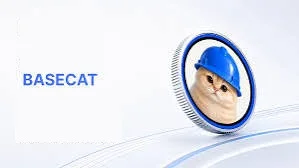
What Is Basecat BASECAT?
Basecat (BASECAT) is a cat-themed memecoin associated with the Base blockchain, combining internet meme culture with a community-oriented crypto identity. Like many meme tokens, Basecat draws attention through its recognizable mascot, online content, and social participation rather than positioning itself primarily around complex financial technology. Its identity centers on a blue-hardhat-wearing cat, a visual character that helps distinguish the project and gives its community a shared symbol for memes, creative expression, and online engagement.
As with other community-driven tokens, understanding Basecat involves looking beyond its name and ticker. Its public identity, community activity, token characteristics, and available on-chain information all matter when evaluating what the project represents and how it operates.
Basecat’s Blue-Hardhat Cat Mascot
The blue-hardhat cat is a defining element of Basecat’s visual identity. In internet culture, cats are popular subjects for memes because they are recognizable, expressive, and easy to adapt into humorous images and short-form content. Adding a blue hard hat gives Basecat a distinct character that can be reused across community posts, illustrations, and other creative material.
The hard hat can also suggest a playful building theme, fitting into the broader culture of blockchain communities that use construction-related language and imagery to describe developing projects. However, the mascot should primarily be understood as a branding and community symbol rather than evidence of a particular technical function or business operation.
A recognizable character can help a memecoin maintain a consistent identity across social platforms. Community members can remix the mascot, create their own interpretations, and share content that reinforces the project’s personality. The extent to which this activity translates into sustained participation depends on the community itself.
A Community-Run Approach to Memes and Social Participation
Basecat’s identity fits the community-oriented model commonly associated with memecoins. Instead of relying exclusively on conventional product features, projects in this category often build recognition through shared jokes, creative contributions, social discussions, and participation from holders and supporters.
For a project like Basecat, community activity may include:
- Meme creation: Sharing humorous images, animations, and posts featuring the blue-hardhat cat.
- Social engagement: Discussing the project, circulating content, and participating in community conversations.
- Creative contributions: Developing artwork, character variations, and other material that expands the project’s visual identity.
- Community coordination: Helping maintain visibility and encouraging participation through shared online activities.
A community-run approach can give participants room to shape a project’s public image. However, it does not automatically establish formal governance rights, decentralized management, or specific token-holder privileges. Those details should be confirmed through the project’s official documentation and verifiable on-chain information.
BASECAT and the Culture of Community-Driven Crypto Tokens
Memecoins occupy a distinctive place in cryptocurrency markets. Many emerge from internet humor, recognizable characters, or shared online interests, with their identities developing through social participation. Their communities can create a sense of belonging, but their visibility and market activity can also change quickly as attention moves between trends.
Basecat fits this broader culture through its cat mascot and association with Base, an Ethereum Layer 2 blockchain ecosystem. The Base network provides an environment for on-chain tokens and decentralized applications, while meme-focused projects use that environment to establish their own identities and communities.
This association should not be confused with an endorsement. Basecat is an independent project and is not officially affiliated with Base or Coinbase simply because it operates on or references the Base ecosystem.
As a memecoin, BASECAT may carry substantial risks, including price volatility, limited liquidity, concentrated token ownership, and changing community interest. A recognizable mascot or active social presence does not guarantee long-term adoption or token value.
Anyone researching the project should verify the official token contract address, inspect available on-chain activity, review liquidity and holder distribution, and be cautious of impersonation tokens. It is also important to distinguish community messaging from independently verifiable facts about the token’s operation and distribution.
Basecat is best understood as a community-oriented, cat-themed memecoin whose identity revolves around its blue-hardhat mascot, meme culture, and connection to the Base blockchain. Its longer-term relevance will depend on the development of its community and the verifiable characteristics of the token, rather than branding alone.
How Basecat Works on the Base Blockchain
Basecat (BASECAT) operates within the Base blockchain ecosystem, where users can interact with digital tokens through on-chain transactions and compatible cryptocurrency wallets. To understand how the token works, it helps to distinguish the infrastructure provided by Base from the characteristics of Basecat itself. Base supplies the blockchain environment for transactions, while BASECAT is an individual token whose contract, distribution, liquidity, and market behavior must be evaluated separately.
Understanding Base as an Ethereum Layer 2 Network
Base is an Ethereum Layer 2 network designed to support decentralized applications and on-chain transactions. Layer 2 networks process transactions using infrastructure separate from Ethereum’s main execution layer while relying on Ethereum for important aspects of settlement and security, according to their respective designs.
By providing an environment compatible with Ethereum’s development ecosystem, Base allows users and developers to interact with smart contracts, decentralized exchanges, and other blockchain applications. Users can connect compatible wallets, transfer supported assets, and participate in on-chain activities without performing every application operation directly on Ethereum mainnet.
Base’s infrastructure can offer a different transaction-cost and user-experience profile from Ethereum mainnet. However, fees, transaction confirmation times, and network conditions can vary. Users should also understand that Layer 2 networks have their own operational and bridging considerations, so their security assumptions are not identical in every respect to those of Ethereum mainnet.
BASECAT as a Token Deployed on Base
BASECAT is presented as a memecoin associated with the Base ecosystem. As a token deployed on a blockchain, its transfers and other supported operations are handled through the relevant smart-contract infrastructure. Users generally interact with the token through compatible wallets and decentralized trading interfaces.
The exact behavior of a token depends on its contract implementation. Features such as transfer restrictions, minting permissions, ownership controls, or other administrative functions cannot be inferred from the BASECAT name or mascot. These characteristics should be checked against the verified contract and any reliable official documentation.
It is also important to confirm that a token belongs to the intended project. Different assets can use similar names and ticker symbols, so searching for “BASECAT” alone is not sufficient to identify the correct token.
Verifying the Contract Address Through BaseScan
Before purchasing or transferring BASECAT, users should locate the token’s official contract address through the project’s official channels and compare it with the information shown on BaseScan, the blockchain explorer for Base.
BaseScan can help users inspect contract details, token transfers, holder information, and transaction history. Where source code has been verified, users may also be able to review the contract implementation. A verified contract can make the code easier to inspect, but it does not independently establish that the project is trustworthy or that interacting with the token is risk-free.
A careful verification process includes:
- Confirming the contract address from a reliable official source.
- Checking that the address and network match the intended BASECAT token.
- Reviewing available contract information, transfer history, and holder distribution.
- Examining liquidity and trading activity where relevant.
- Avoiding unsolicited links and impersonation tokens using similar branding.
Transferring and Trading BASECAT
Once the correct token has been identified, users can interact with it through compatible wallets and supported applications. On-chain transfers record token movements, while decentralized exchanges may allow users to swap BASECAT against other assets when a suitable trading pool exists.
These transactions generally require network fees, and swaps may be affected by liquidity, price impact, and slippage. A displayed market price does not guarantee that a trade can be completed at that price, particularly when trading activity or available liquidity is limited.
Operating on Base gives a token access to an established blockchain environment, but it does not guarantee the token’s security, liquidity, legitimacy, or market performance. A token can still have vulnerabilities, concentrated ownership, limited trading depth, or rapidly changing demand.
Understanding how Basecat works requires examining both the Base network and the BASECAT contract itself. Verifying the contract, reviewing on-chain activity, and understanding transaction risks are essential steps before interacting with the token.
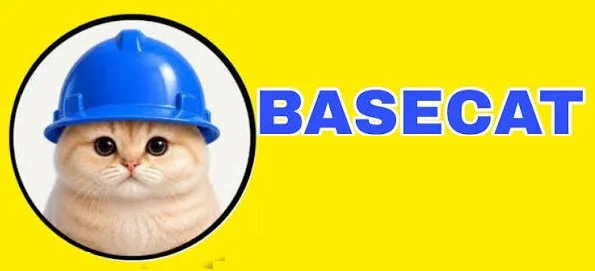
Basecat’s Community, Memes, and Blue Helmet Identity
Basecat (BASECAT) builds its public identity around a distinctive cat character wearing a blue construction helmet. Like many community-driven memecoins, the project uses recognizable imagery, humor, and social participation to help supporters connect with its brand. Rather than relying only on technical messaging, Basecat’s identity gives community members a visual character they can share, remix, and incorporate into their online profiles.
The blue helmet is central to this approach. It creates a consistent visual theme across the project’s community content and provides a simple way for supporters to signal their participation. The effectiveness of this identity ultimately depends on how people engage with it, contribute creative material, and continue sharing the character across social platforms.
The Blue Construction Helmet as Basecat’s Signature Symbol
The blue construction helmet distinguishes Basecat’s mascot from other cat-themed memecoins. Construction imagery is often associated with building, contributing, and developing something over time, making it a natural fit for online communities that want to present themselves as active participants in a growing project.
For Basecat, the helmet functions primarily as a branding element. Its recognizable shape and color make the character easy to identify in profile pictures, memes, illustrations, and social posts. Repeating these visual elements helps create consistency even when community members produce content in different styles.
The mascot also gives supporters a shared creative reference point. Someone can create a humorous image, design a new character variation, or use the helmet in a personal profile picture while maintaining a recognizable connection to the Basecat identity. This kind of visual participation is common in memecoin communities, where cultural recognition can be as important to public identity as technical features.
Memes, Profile Pictures, and Social Participation
Memes allow communities to communicate through humor, shared references, and easily circulated images. For a project like Basecat, supporters can use the helmet-wearing cat in social media posts, reactions, profile pictures, and other creative formats.
Profile pictures are especially useful because they make participation visible across online spaces. A community member who adopts a Basecat-inspired image can express an interest in the project without needing to publish detailed explanations or technical content.
Community-created content can take several forms:
- Memes and humorous posts: Using the mascot to comment on crypto culture, community experiences, or internet trends.
- Profile pictures: Incorporating Basecat’s recognizable helmet into personal avatars.
- Creative variations: Producing original artwork and character designs that retain the project’s visual identity.
- Social sharing: Circulating images and participating in conversations across relevant online platforms.
These activities can help a memecoin develop a recognizable community culture. However, social engagement should not be confused with verified token adoption, sustained demand, or financial value.
Basecat’s Profile Picture Generator
Basecat’s community website includes a profile picture generator that allows users to add the project’s blue helmet to their images. This feature gives supporters a straightforward way to personalize an existing picture while incorporating a recognizable element of the Basecat brand.
The generator connects the project’s visual identity with direct community participation. Instead of requiring users to create an illustration from scratch, it offers a more accessible way to produce a Basecat-themed avatar. Users can then choose whether to share that image on social media or use it as a profile picture.
As with any image-upload tool, users should consider the privacy implications of submitting personal photographs. They should review the website’s current instructions and any available information about image handling before uploading sensitive or identifiable images.
The Crew Wall and Community Recognition
The Crew Wall serves as a gallery for approved community profile pictures, giving participating users a way to display their Basecat-themed avatars alongside other contributions. A shared gallery can reinforce the project’s collective identity by bringing individual creative expressions into one visible space.
Community features can change over time. New uploads may be paused, and inclusion in the gallery should not be assumed to be continuously available. Users should check the current website status before expecting to submit an image or have it displayed.
Basecat’s blue helmet, profile picture generator, and Crew Wall help turn its mascot into a participatory community identity. These features support creative expression and social recognition, while the project’s longer-term community strength depends on continued participation rather than visual branding alone.
Basecat BASECAT is a community-driven memecoin on the Base blockchain built around a blue-hardhat cat mascot, meme culture, and social participation. Its ecosystem includes community creation tools and the Basecat Run game, alongside an AI agent and additional applications intended to expand the project’s reach.
Crypto and meme culture go hand‑in‑hand, and few tokens capture that playful spirit like Russell RUSSELL — a community‑driven meme coin rooted in one of the most beloved narratives in the space! Born from internet buzz around the Akita Inu dog of Coinbase CEO Brian Armstrong, Russell quickly became a Base blockchain favorite that thrives on its social DNA and cultural appeal rather than utility.
Russell (RUSSELL) is a community-driven meme token built on the Base blockchain, designed to capture the energy, humor, and engagement of the growing Web3 community. Unlike conventional cryptocurrencies that focus primarily on utility, governance, or DeFi functionality, Russell thrives on cultural resonance, storytelling, and the collective enthusiasm of its community. It embodies the spirit of fun and accessibility in crypto while fostering connections among enthusiasts within the Base ecosystem.
These initiatives give Basecat a broader community-focused direction, although some features remain planned or under development. The token’s primary identity is cultural and community-based, so its long-term relevance depends on continued participation, execution of announced plans, and demand within the Base ecosystem. As with other memecoins, BASECAT carries substantial market risk.
[…] a distinct position within the rapidly growing Base ecosystem. Unlike many other meme coins that focus purely on speculative trading or fleeting hype, Russell derives its strength from cultural resonance, narrative appeal, and the collective energy […]
[…] the Base blockchain, featuring a recognizable cat wearing a blue construction helmet. The project focuses on community participation, meme culture, and creative activities rather than presenting itself as a traditional blockchain […]