
Upland SPARKLET: Virtual World Utility Token

Table of Contents
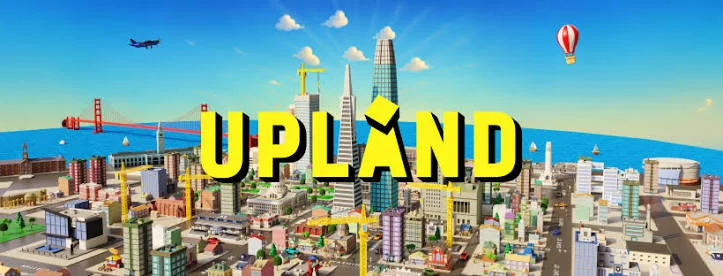
Upland SPARKLET is the resource and utility token that powers many building and production activities in Upland, a blockchain-based virtual world built around digital property, virtual assets, and a player-driven economy. Players use SPARKLET for tasks such as constructing buildings, manufacturing virtual items, fueling vehicles, and supporting other in-game systems. The token is available within Upland and as a tradable ERC-20 asset on Ethereum and Base.
SPARKLET is different from UPX, Upland’s in-game transactional currency, and STEM, the account-bound currency used in its Life systems. Understanding these differences helps explain how Upland separates property transactions, resource-based development, and selected gameplay activities. SPARKLET can also be bridged between Upland and supported external networks, subject to the platform’s procedures and restrictions. However, its market price can fluctuate, and its practical utility depends on activity within the Upland ecosystem. Examining its use cases, token structure, blockchain availability, and associated risks provides a clearer picture of its role in Upland’s digital economy.
For more insights and updates on the latest cryptocurrency trends, check out our Nifty Finances platform, your gateway to smarter financial decisions in the digital economy.
What Is Upland and How Does Its Digital Economy Work?
Upland is a blockchain-powered virtual world that combines property trading, city building, digital collectibles, and community-driven commerce in an interactive game environment. Launched in 2019, the platform allows players to acquire virtual properties connected to real-world addresses, construct buildings, develop neighborhoods, and trade digital assets with other participants. Rather than focusing solely on exploration or collecting, Upland brings these activities together through a persistent virtual economy where players help shape the world over time.
The project describes its experience as a real-world city-builder in which players, known as Architects, develop properties and attract digital residents called Uppies. Its economy connects property ownership with construction, manufacturing, transportation, and player-operated businesses, creating different ways to participate beyond buying and selling virtual land.
Virtual Properties Connected to Real-World Locations
One of Upland’s defining features is its map, which is based on actual streets and addresses across supported cities. Players can explore available locations, acquire eligible virtual properties, and develop them with structures that contribute to the appearance and activity of their neighborhoods.
Although properties correspond to real-world locations, ownership refers to digital assets within Upland rather than legal ownership of the physical land or buildings. This distinction is important because the experience takes place in a virtual environment governed by the game’s systems and terms.
Players can pursue different strategies, such as collecting properties in particular neighborhoods, developing compatible locations, or trading assets with other participants. The platform’s persistent-world design means that progress is intended to continue rather than being erased through regular seasonal resets.
Digital Assets, Buildings, and Vehicles
Upland extends beyond virtual property ownership by allowing players to create, acquire, and trade additional digital assets. Depending on the available features, these include residential buildings, commercial structures, decorative items, vehicles, racing karts, and other collectibles.
Buildings can help players develop their properties and support different activities. Residential structures provide living space for Uppies, while service buildings and commercial locations contribute to neighborhood development and gameplay systems. Vehicles support activities such as racing and transportation, while decorative assets allow players to personalize their surroundings.
Factories also play a role in the economy by manufacturing certain digital items that can be sold to other players. These interconnected activities give players opportunities to participate as collectors, builders, traders, and creators rather than limiting the experience to property acquisition alone.
Blockchain Ownership and a Player-Driven Economy
Blockchain technology supports Upland’s digital ownership and trading model. Eligible virtual assets can be represented through blockchain-based records, while the platform provides marketplaces and gameplay systems through which players interact with those assets.
Instead of relying entirely on fixed prices set by the platform, player-to-player markets allow participants to negotiate prices for supported properties and items. Supply, demand, asset characteristics, and player preferences can all influence trading activity.
Upland also supports player-operated businesses called Metaventures. These include shops and showrooms that sell digital goods, factories that manufacture assets, nurseries that produce seeds, and other specialized businesses. Operating a business may require suitable property, in-game resources, and compliance with the platform’s requirements.
The result is an interconnected economy in which construction, manufacturing, trading, and community collaboration can support one another. However, participation does not guarantee that an asset will appreciate in value or that a business will generate a profit.
Understanding SPARKLET and the In-Game Economy
SPARKLET is a resource token that supports creation and development within Upland. It is used for activities such as constructing structures, manufacturing eligible digital items, and powering certain vehicle-related functions. Players and entrepreneurs may need to commit SPARKLET to eligible activities according to the relevant game mechanics.
Upland also uses UPX, its in-game transactional currency, for activities such as acquiring properties, purchasing items, and completing marketplace transactions. SPARKLET and UPX serve different purposes: UPX facilitates many in-game purchases, while SPARKLET supports construction, production, and other resource-intensive activities.
The platform’s broader economy also includes other resources and gameplay systems. Their availability and uses may vary by activity, so players should consult current documentation before committing assets.
Community Participation and the Risks of Digital Ownership
Upland encourages players to collaborate on neighborhood development, create digital goods, participate in events, and operate businesses. This community-oriented approach helps connect gameplay with an economy driven partly by participant activity.
Nevertheless, virtual assets have risks. Their market prices can fluctuate, buyer demand may be limited, and some features or options for converting eligible assets into money may depend on location, verification, fees, and platform rules. Blockchain-based ownership also does not remove the need to protect account credentials or understand the terms governing digital assets.
Upland combines virtual property ownership, city building, digital production, and player-led commerce in a persistent world. Its economy relies on the interaction between assets, resources, businesses, and community participation, with SPARKLET serving as one of the key resources supporting creation and development.
SPARKLET vs. UPX vs. STEM: Understanding Upland’s Currencies
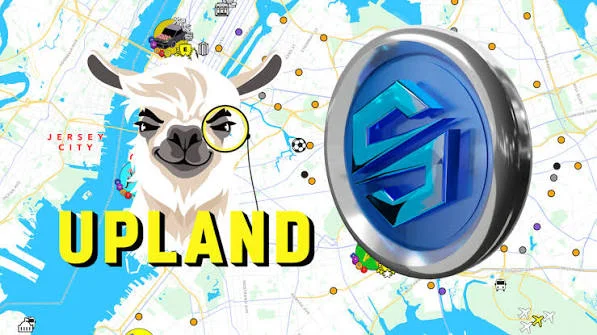
Upland combines virtual property ownership, construction, trading, and life-simulation gameplay within a shared digital world. To support these different activities, the platform uses three principal in-game currencies: UPX, SPARKLET, and STEM. Although all three help players participate in Upland’s economy, each serves a distinct purpose and comes with different rules for use, transferability, and trading.
Understanding these differences is important for players deciding how to purchase virtual properties, develop buildings, manufacture digital items, or participate in Upland’s plant-care and farming systems. According to Upland’s documentation, these currencies are designed to support different parts of the game rather than function as interchangeable forms of money.
UPX: Upland’s Transactional Currency
UPX is the primary in-game transactional currency used for many everyday purchases and marketplace activities. Players can use it to acquire eligible virtual properties, purchase structures and vehicles, buy ornaments, and pay certain transaction-related fees.
Its role is similar to a medium of exchange within Upland. Instead of negotiating every transaction using an external cryptocurrency, players can use UPX to participate in the platform’s internal economy. It also states that purchases made through its web store use a reference rate of 1,000 UPX per US dollar, subject to the applicable purchase terms.
UPX is transferable within Upland under the platform’s rules, but it is not freely tradable on external cryptocurrency exchanges. It should therefore be understood primarily as an in-game currency rather than an unrestricted cryptocurrency.
SPARKLET: The Resource for Building and Production
SPARKLET is Upland’s resource token for development, construction, manufacturing, and other asset-related activities. It supports the creation and operation of parts of the virtual world, allowing players and businesses to contribute to the economy beyond buying and selling property.
Common uses include:
- Constructing buildings and other structures on virtual properties.
- Manufacturing vehicles, ornaments, and eligible user-generated items.
- Supporting factories, nurseries, and player-operated businesses.
- Fueling certain vehicle activities and enabling other development-related mechanics.
- Participating in selected systems involving Uppies and digital asset creation.
SPARKLET can be allocated to tasks for a specified duration, a process commonly described as staking within Upland’s construction and manufacturing systems. In other cases, it may be consumed outright. The exact treatment depends on the activity.
Unlike UPX, SPARKLET also exists as a tradable ERC-20 token on supported external blockchain networks, including Ethereum and Base. Users may be able to bridge it between the wider token ecosystem and Upland, subject to eligibility, technical requirements, and current platform rules. External trading introduces market-price fluctuations and additional blockchain risks.
STEM: The Currency for Upland’s Life Systems
STEM is the dedicated currency for Upland’s Life systems, which extend gameplay into plant care, farming, and animal-related activities as those features become available.
Players use STEM to maintain plant health and care for plants and animals within the relevant gameplay systems. The currency is intended to help players participate in these activities without needing to acquire a tradable external token first.
Upland describes STEM as account-bound and non-tradable. Unlike SPARKLET, it is not designed to be transferred freely between players or traded on external cryptocurrency exchanges. It can be earned through eligible gameplay, events, rewards, farming-related activities, and store purchases, depending on the current mechanics.
These restrictions reflect STEM’s purpose as a gameplay resource rather than a general-purpose trading asset.
Key Differences in Transferability and Use
The main distinction between the three currencies is their function within Upland’s economy. UPX supports transactions, SPARKLET powers development and production, and STEM supports Life-system activities.
Their transfer rules also differ. UPX operates within Upland’s marketplace and payment systems; SPARKLET has both in-game utility and an external token form with applicable bridging requirements; STEM remains account-bound and non-tradable.
Players should check the documentation before assuming that one currency can be exchanged for another or used to pay for every activity. Features, fees, and eligibility requirements can change as Upland expands its economy.
UPX, SPARKLET, and STEM work together to support different layers of Upland’s virtual world. Understanding their separate purposes helps players plan purchases and development activities while recognizing that in-game utility does not guarantee real-world monetary value.

How SPARKLET Staking and Spending Work
SPARKLET is a resource token that powers construction, manufacturing, and other development-related activities in Upland’s virtual world. Players can use it to build structures, produce digital items, and access selected gameplay features. Upland supports two distinct ways of using this resource: staking, which temporarily allocates SPARKLET to a task, and spending, which permanently consumes SPARKLET to produce a specified outcome.
Understanding the difference is important because the two mechanisms affect a player’s available resources differently. Staking makes SPARKLET temporarily unavailable while a task is underway, whereas spending removes the committed amount from the player’s inventory.
What SPARKLET Staking Means
In Upland, staking means allocating SPARKLET to an eligible task for the duration required to complete it. The token acts as a resource that supports work within the game rather than functioning as a deposit designed to earn financial interest.
Construction is one example. When a player builds a house or another eligible structure on a virtual property, SPARKLET can be allocated to the construction process. It can also support manufacturing activities in which factories produce digital items, such as vehicles or decorations.
The amount of SPARKLET allocated and the time needed to finish a task depend on the requirements of the activity. Upland measures construction and manufacturing requirements using Spark Hours, which combine the amount of resources committed with the time needed to complete the work.
For example, a task that requires a substantial amount of Spark Hours may take longer when a player allocates fewer resources. Committing more eligible SPARKLET can help meet the required resource-time combination, subject to the game’s limits and mechanics.
How Staking Works During a Task
The general process involves selecting an eligible activity, reviewing its resource requirements, and allocating SPARKLET through the relevant game interface. Once the task begins, the committed amount remains assigned to that activity until its requirements are met.
Typical staking activities include:
- Construction: Allocating SPARKLET to build structures on eligible properties.
- Manufacturing: Supporting factory production of items such as vehicles and decorations.
- Vehicle-related activities: Providing resources for supported functions such as charging.
- Other development systems: Participating in additional tasks as Upland introduces or updates its mechanics.
When a staking task finishes, the allocated SPARKLET is returned to the player’s available balance under the applicable rules. The resulting structure or manufactured item is a separate outcome of the completed task. Staking does not automatically mean the resource has been permanently spent. <Cite refs={[“turn782607search3″,”turn782607search8”]}/>
How SPARKLET Spending Differs
SPARKLET spending is a separate mechanism in which the committed tokens are permanently consumed to achieve a specific result. Unlike staking, spent SPARKLET does not return to the player’s available balance when the activity finishes.
Upland introduced its SPARKLET Spend system with Seed Generation in December 2025. Players can use SPARKLET at eligible nursery businesses to generate seeds, which can then be traded or sold through the supported in-game systems. The platform has also described further uses, including Uppie Evolution, as part of its expanding gameplay mechanics. Availability depends on the features currently implemented.
The key differences are:
- Staking: Temporarily allocates SPARKLET to a task; the resource returns when the task is completed.
- Spending: Permanently consumes SPARKLET to generate an item or achieve an eligible gameplay outcome.
- Task requirements: Both mechanisms follow the specific resource costs, limits, and conditions established for the activity.
Players should check the current requirements before committing tokens, particularly when an activity involves permanent spending.
Why Task Requirements and Duration Matter
SPARKLET requirements are not necessarily identical across all activities. Constructing a particular building may require a different amount of Spark Hours than manufacturing a vehicle or generating a seed. The asset being created, the production system, and the rules in effect all influence the resources needed.
Task duration also matters when planning development. SPARKLET allocated to one project may not be available for another activity until the first task is complete. Players who operate several properties or factories may therefore need to consider how they distribute their resources across simultaneous or sequential projects.
Upland can also adjust resource requirements as its economy and gameplay systems evolve. Players should consult the current in-game interface and documentation rather than relying entirely on older guides or previously advertised requirements.
Staking Is Not a Financial-Yield Product
Although the term staking is commonly used in cryptocurrency to describe mechanisms that may offer financial rewards, Upland’s task-based SPARKLET staking serves a different purpose. It allocates a resource to complete an in-game activity; it should not be interpreted as a guaranteed interest-bearing deposit or a promise of financial returns.
The potential value of a completed structure or manufactured item depends on its usefulness, demand, and the conditions of Upland’s player-driven economy. Spending SPARKLET also does not guarantee that the resulting item will appreciate or generate revenue.
SPARKLET staking and spending help power different parts of Upland’s virtual economy. Knowing whether a task temporarily reserves tokens or permanently consumes them allows players to plan construction, manufacturing, and other activities more effectively while understanding the resource commitments involved.
Upland SPARKLET is a utility token that powers building, manufacturing, vehicle-related activities, and other resource-based systems in Upland’s blockchain-powered virtual world. Unlike UPX, which serves as the game’s transactional currency, SPARKLET also exists as a tradable token on Ethereum and Base.
What if a virtual world could be more than a place to play games? Highstreet HIGH brings gaming, retail, social interaction, and digital ownership together through Highstreet World, a multifaceted metaverse designed around exploration and new digital experiences. The project combines the entertainment of an online world with blockchain-based assets, allowing users to participate in an economy where virtual experiences and commerce intersect.
Its role connects in-game development with an external blockchain economy, although its usefulness depends on the activities supported by Upland and the rules governing token transfers. SPARKLET is best understood as a resource for participating in Upland’s digital economy, not as a token that guarantees investment returns. Its longer-term relevance will depend on the platform’s continued development, real demand for its utility, token management, and the risks associated with external crypto markets.