
SuperTrust SUT: Utility Token Powering a Real-World Ecosystem

Table of Contents
If you’re serious about real-world crypto utility, SuperTrust SUT isn’t just another token — it’s a multi-platform ecosystem powerhouse that connects blockchain tech with everyday services! From seamless payments to transparent credit trading and real-economy rewards, SuperTrust is built on Polygon Layer-2 for speed and low fees — and it’s designed to onboard Web2 users into Web3 with ease.
Imagine earning tokens as you use travel, advertising, film streaming, and environmental platforms — all powered by one native coin. That’s the promise here! With active community growth, global listings on exchanges like KuCoin, Bitget, and more, plus innovative credit systems like DeCT SuperSave, SUT is carving a niche in practical blockchain adoption.
Whether you’re a trader, user, or ecosystem participant, this article dives deep into SuperTrust’s core mechanics, utilities, and future potential. Ready to explore how SUT bridges real-world value with Web3? Let’s go!
For more insights and updates on the latest trends in cryptocurrency, be sure to check out our Nifty Finances platform, your gateway to smarter financial decisions in the digital economy.
What Is SuperTrust SUT?
SuperTrust (SUT) represents more than just another token on the blockchain—it’s the native utility token of an ambitious ecosystem designed to connect digital finance with real-world applications and services. Built on a modern blockchain infrastructure and supported by a portfolio of consumer-facing platforms, SuperTrust aims to bridge traditional economic activity with decentralized technologies in a way that prioritizes practical usage over pure speculation.
Defining SUT and Its Role in the SuperTrust Ecosystem
At its core, SUT (Super Trust Token) functions as the central transactional asset within the SuperTrust ecosystem. Unlike many cryptocurrencies that are primarily traded as assets or speculative instruments, SUT is engineered to be used actively across a series of real-world platforms and services developed under the SuperTrust umbrella. This includes areas such as advertising, travel booking, content platforms, and decentralized credit trading services.
SUT’s role goes beyond being a medium of exchange—it also serves as an incentive and utility engine that encourages participation and integration across the ecosystem. Users can employ SUT to pay for services, receive discounts, and earn rewards, depending on how they interact with the network’s platforms.
SuperTrust’s Mission: Bridging Digital Finance and Real-World Platforms
The overarching mission of SuperTrust is to connect digital finance with real-world platforms, effectively bringing blockchain technology into everyday economic use cases. Instead of existing primarily within speculative markets, the SuperTrust ecosystem is designed to offer practical utility for users and businesses alike. Its mission emphasizes:
- Integration with everyday services: allowing users to pay with SUT on platforms that operate in sectors like advertising (MOAD), travel and leisure booking (L2U), user-generated nature content (NatureBook), and indie film streaming (ZeroPlus).
- Real economy interactions: empowering users to transact with blockchain-based assets in ways that hold tangible value outside purely digital markets.
- System innovation: leveraging transparent blockchain principles to reduce intermediaries, lower costs, and attract traditional Web2 users into decentralized finance.
By focusing on actual product and service utility, SuperTrust attempts to create real demand for the SUT token, rather than depending solely on market hype or speculative trading.
Polygon Layer-2 Architecture: Fast, Cheap Transactions
One of the most significant technical choices behind SUT is its deployment on the Polygon network, a Layer-2 scaling solution for Ethereum. Operating on Polygon offers important benefits that align with SuperTrust’s real-world usage goals:
- Fast transaction speeds: Transactions on Polygon typically finalize in seconds, enabling smooth user experiences for payment and service interactions.
- Low fees: Polygon’s cost structure means that transaction fees are minimal, often just a few cents, making SUT practical for frequent, everyday payments rather than just large transfers.
- Scalability: As an L2 solution, Polygon allows SuperTrust to scale its operations without the congestion and high fees associated with Ethereum’s mainnet.
These features are essential for SUT’s role as a payment and utility token, because expensive or slow transactions would hinder adoption for real-world services.
How SUT Differs from Meme or Speculative Coins
Unlike meme coins or tokens with value driven primarily by hype and speculation, SUT is constructed with clear functional utility in mind. Meme coins often rely on community sentiment or viral trends and may lack substantive use cases. In contrast, SUT’s design emphasizes:
- Actual transactional functions across multiple consumer platforms.
- Discount incentives that encourage token usage for services instead of simply holding for price gains.
- Integration with real-world economic activities, from advertising and travel booking to content services.
This focus on utility over speculation aims to create sustained demand rooted in tangible use cases, rather than relying solely on price movement narratives.
SuperTrust SUT is positioned as a practical utility token—one that seeks to bring blockchain functionality into everyday digital and economic interactions rather than existing solely as a speculative asset.
DeCT and SuperSave: Transparent Blockchain Credit
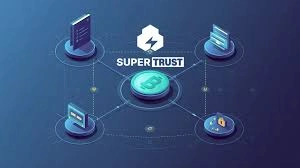
Decentralized Credit Technology (DeCT) and SuperSave represent SuperTrust’s ambitious approach to reinventing credit and savings within the blockchain economy. By embedding credit trading into a transparent, on-chain environment, SuperTrust aims to replace traditional, opaque financial intermediaries with automated, verifiable systems that put users in control of their digital assets and obligations.
What Is DeCT (Decentralized Credit Technology)?
Decentralized Credit Technology, or DeCT, is the foundational framework behind SuperTrust’s credit trading mechanism. Instead of relying on banks, brokers, or third-party credit services to issue, record, and manage credit agreements, DeCT leverages blockchain’s decentralized ledger to record all credit activity transparently and immutably. This means that every credit issuance, repayment plan, and settlement is visible on the blockchain and verifiable by participants—creating trust through technology rather than intermediaries.
Under DeCT, credit isn’t an abstract promise recorded in centralized databases; it becomes a programmable credit instrument governed by smart contracts that automatically enforce terms, timelines, and repayment schedules. By decentralizing the process, DeCT enables peer-to-peer credit interactions where users can act as both creditors and debtors without needing traditional financial infrastructure.
How SuperSave Credit Trading Works on the Blockchain
SuperSave is the practical implementation of DeCT within the SuperTrust ecosystem. At its core, SuperSave allows users to trade credit positions in SUT tokens through blockchain smart contracts. The process typically follows a straightforward model:
- A credit seller offers SUT tokens for credit. By doing so, this seller temporarily transfers ownership of those tokens to a “credit buyer” (often the platform or another user) and takes on the role of a creditor.
- The credit buyer receives SUT tokens and becomes a debtor, committing to repay the total credit amount to the creditor within an agreed timeframe—often structured over a period like 365 days with scheduled installments.
- Throughout the credit period, smart contracts automate repayment schedules, enforce agreed terms, and handle settlements without human intervention.
All transactions and credit states are recorded on the blockchain, providing an indisputable record of who owes what, when repayments occur, and how obligations evolve. This model eliminates the need for centralized bookkeeping, reduces administrative costs, and strengthens trust through transparency.
Benefits: Transparency and Automated Settlement
One of the most significant advantages of DeCT and SuperSave is transparency. Traditional credit systems often operate behind closed doors, with users having limited visibility into loan terms, repayments, or asset custody. On the SuperTrust blockchain, however, every credit agreement and transaction is publicly verifiable, ensuring that all parties can independently confirm the status of credits and repayments at any time.
Smart contracts also enable automated settlements. Because the contract logic is self-executing, agreed repayments and credit enforcement occur without manual intervention. This automation reduces human error, eliminates disputes over the interpretation of terms, and accelerates settlement timelines.
Additional benefits include:
- Reduced reliance on intermediaries, lowering fees and inefficiencies.
- Immutable record-keeping, preventing data tampering or unilateral changes to terms.
- Programmable credit flows, where repayment schedules and conditions can be tailored within smart contract code.
- Global accessibility, opening decentralized credit to users worldwide without geographic barriers.
Real-World Use and Growth Incentives
SuperSave isn’t just theoretical—it’s designed to support real-world growth in the SuperTrust ecosystem. By offering a transparent credit marketplace, SuperTrust encourages users to hold and transact SUT tokens more actively, turning what might otherwise be idle digital assets into productive financial instruments.
Credit sellers are incentivized by potential returns spread over time, while credit buyers gain immediate access to SUT liquidity without traditional loans. Broadly, this mechanism helps expand token utility across SuperTrust’s suite of platforms—from advertising and travel services to media and community rewards—reinforcing SUT’s practical demand and circulation.
DeCT and SuperSave represent SuperTrust’s bid to democratize credit through transparent, automated blockchain technology—offering a modern alternative to legacy financial systems that aligns with decentralized finance principles.
SuperTrust Ecosystem Overview
The SuperTrust ecosystem is designed around a unified vision: create a blockchain-powered financial and service network where one native token — SUT (Super Trust Token) — is used across multiple real-world platforms. By connecting advertising, travel, content, savings/credit, and community experiences, SuperTrust aims to turn everyday digital and economic activity into a comprehensive decentralized Web3 economy. Essential to this ecosystem are several core services, each with distinct functions but linked by shared technology, user incentives, and transparent blockchain infrastructure.
Core Services Powered by SuperTrust
MOAD (Mobile Outdoor Advertising Platform)
MOAD transforms traditional vehicle advertising into a blockchain-enabled ecosystem. Utilizing GPS tracking and digital verification, drivers can earn SUT tokens for displaying ads on their vehicles, while advertisers gain transparency into ad reach and effectiveness. This innovative approach eliminates intermediaries, reduces cost, and rewards participants directly.
NatureBook (Environmental & Community Platform)
NatureBook is a community-driven platform where users capture and share nature content — such as photos of forests, reefs, and landscapes — and receive incentives in SUT or ecosystem tokens. Beyond just a social platform, it promotes environmental awareness and stewardship by rewarding meaningful contributions tied to ecological documentation and learning.
L2U (Leisure-To-You Travel & Leisure Booking)
L2U functions as a travel and leisure service powered by blockchain. Users can book flights, hotels, and leisure activities, paying with SUT for fast, low-fee transactions and often receiving discounts or cashback rewards built into the system. By integrating travel booking with decentralized finance, L2U reduces reliance on traditional booking intermediaries and brings crypto utility into everyday lifestyles.
SuperSave (Decentralized Credit & Savings Market)
SuperSave extends SuperTrust’s financial tools into transparent blockchain credit trading. Users can act as creditors or debtors in credit markets using SUT and DeCT (Decentralized Credit Technology). Smart contracts automatically manage credit terms, repayments, and settlements — creating an open credit economy without centralized financial institutions. This service increases liquidity and encourages active token participation across the ecosystem.
ZeroPlus (Film & Media OTT Platform)
ZeroPlus is an entertainment platform focused on independent and low-budget commercial films. Content creators can publish their work, while audiences engage with media and potentially earn rewards. By integrating blockchain’s transparency and reward systems, ZeroPlus aims to democratize media access and support creators outside traditional entertainment gatekeepers.
Real-World Application Examples
The real strength of the SuperTrust ecosystem lies in its practical, everyday applications — not just abstract crypto concepts. In the travel sector, users can seamlessly book and pay for travel services on L2U using SUT, enjoying discounted fees and faster settlements compared to traditional platforms. Similarly, MOAD’s vehicle advertising model rewards real drivers with SUT for ad impressions, turning routine driving into a revenue-generating activity. NatureBook turns nature photography and ecological engagement into real economic value, while ZeroPlus brings film consumption and creation into a reward-driven environment. SuperSave reimagines credit and savings markets entirely on blockchain, bypassing traditional finance while maintaining transparency and automated settlement.
How Users Interact with Each Platform via SUT
Across all these services, SUT serves as the connective transactional thread. Users earn, hold, and spend SUT in a multitude of ways:
- Earn tokens by participating in ecosystem activities — from driving with MOAD to posting on NatureBook.
- Pay for services such as travel, advertising space, and media consumption on their respective platforms.
- Engage with financial products, including credit trading and savings mechanisms, through SuperSave.
- Benefit from incentives and discounts tied directly to SUT payments, making daily usage more cost-effective than traditional non-crypto alternatives.
SuperTrust’s ecosystem is more than a collection of isolated services — it’s a holistic network where blockchain technology and practical utility converge to bring real-world value to users, innovators, and service providers alike.
Token Utility and User Benefits
The SuperTrust Token (SUT) isn’t just a tradable cryptocurrency — it’s the lifeblood of the SuperTrust ecosystem, powering payments, incentives, and potentially governance across multiple real-world blockchain services. Designed to embed utility rather than speculation, SUT connects decentralized finance with everyday digital interactions and rewards users for meaningful engagement.
Payments and Discounted Fees for Ecosystem Services
One of the clearest and most practical uses of SUT is as a payment token across SuperTrust’s suite of platforms. Whether users are buying advertising space through the MOAD platform, booking travel services on L2U, or accessing content on ZeroPlus and NatureBook, SUT functions as the native medium of exchange — enabling transactions that are fast, low-cost, and integrated with smart contract automation.
What makes this even more compelling for everyday users is the discount incentive built into payments. In markets where SuperTrust’s platforms operate (notably South Korea), users who choose to pay fees in SUT can receive substantial discounts — typically in the range of 30% to 50% — compared to traditional payment methods. This creates a direct economic benefit for transacting with the token, making SUT a practical choice for routine services rather than a speculative asset.
These payment utilities turn otherwise abstract crypto interactions into tangible cost savings — a key driver for adoption among everyday consumers and businesses alike.
Earning Mechanisms: Rewards, Engagements, Platform Activities
SuperTrust also embeds reward mechanisms that let users earn SUT through platform participation. These aren’t limited to simple referrals or holding tokens; instead, they are tied to real engagement and ecosystem activity:
- Platform Interaction Rewards — Users can receive tokens for engaging with ecosystem services, such as contributing content on platforms like NatureBook or participating in service-related activities.
- Participation Incentives — Activities such as driving with the MOAD vehicle, advertising, contributing data or media content, or completing certain service tasks can all generate SUT rewards within the system.
- Exchange and Campaign Rewards — SUT has been featured in exchange-level campaigns where users can earn bonus tokens through participation in trading or community incentive programs.
Together, these mechanisms encourage active user participation rather than passive investment. Users who contribute value to the ecosystem — whether through engagement, content, or activity — are rewarded, reinforcing the idea that utility and utility-driven rewards create meaningful adoption.
How Utility Drives Adoption Beyond Speculation
What ultimately sets SUT apart from meme tokens or purely speculative assets is its embedded utility across real-world services. Instead of existing mainly as a price instrument traded for quick gains, SUT is activated through everyday use cases:
- It’s a payment method that saves money.
- It’s a reward engine tied to user activity.
- It’s a potential governance tool with decision-making influence.
This combination transforms SUT from simply a token you hold into a token you use, earn, and participate with — creating a cycle of real demand rooted in tangible experiences.
In an ecosystem where token value is reinforced by real utility rather than pure speculation, SUT’s design helps give users practical reasons to adopt and engage with decentralized services — bridging digital finance with real-world activity in a meaningful way.
SuperTrust SUT stands out because it’s more than a token — it’s the transactional backbone of a multi-service Web3 ecosystem that aims to bring blockchain into everyday life. From discounted payments and real-world services to transparent credit trading and diverse platforms, SuperTrust bridges traditional Web2 users with decentralized finance practically and engagingly.
With Polygon’s fast, low-fee network powering SUT, users enjoy quick transactions while tapping into advertising, travel, environmental impact, and creative media avenues all within the same ecosystem. Exchange listings and growing communities further widen its reach, making SUT accessible for anyone curious about purposeful crypto utility.
In the dynamic space where NFTs meet utility tokens, Zpunk Token (ZPT) securely powers the vibrant Zpunks ecosystem on Polygon! If you missed Cryptopunks, here’s your second chance—Zpunks delivers 3D animated collectible NFTs, and ZPT is the lifeblood that fuels staking, rewards, and more. Whether you’re an NFT collector, DeFi lover, or crypto explorer, ZPT lets you stake to earn passive income, participate in a launchpad reinvestment model, score free special NFTs, and enjoy exclusive giveaways—all with transparency and long-term trust at its core. Get ready to explore how ZPT transforms art into opportunity!
If you’re exploring tokens with real-world use cases, SuperTrust SUT deserves a serious look. Dive into the ecosystem, engage with its services, and discover how crypto can power more than speculation — it can fuel everyday digital life.
[…] more than just ownership of artwork. One project leading this shift is Zpunks, an NFT ecosystem built on the Polygon blockchain. At the heart of this ecosystem lies the Zpunk Token (ZPT)—a utility token designed to provide […]