
ShredN SHRED: NFT Liquidity Token & Marketplace Utility

Table of Contents
Ready to dive into one of the most intriguing projects bridging NFTs and token utility? ShredN SHRED isn’t just another crypto token — it’s a core utility and governance asset within a platform built to solve one of the NFT world’s biggest challenges: liquidity. As the NFT space continues to grow, so does the need for smoother price discovery, fair valuations, and real trading depth. ShredN tackles this head‑on by offering targeted liquidity strategies for different NFT types and tools that help traders, collectors, and liquidity providers alike.
Holders of the SHRED token enjoy perks like lower trading fees, governance voting power, and rewards for supporting platform liquidity. This guide breaks down what ShredN is all about — from how the ecosystem works and SHRED utility to tokenomics, features, and real use cases that matter to NFT traders and crypto investors alike!
For more insights and updates on the latest cryptocurrency trends, be sure to check out our Nifty Finances platform, your gateway to smarter financial decisions in the digital economy.
What Is ShredN SHRED?
The ShredN platform represents a new approach to solving one of the most persistent challenges in the non‑fungible token (NFT) market: liquidity. In traditional NFT ecosystems, high‑value digital assets often remain stagnant because there aren’t enough buyers or efficient market mechanisms to trade them quickly. ShredN attempts to address that gap with a suite of tools and protocols designed to make NFTs easier to price, trade, fractionalize, and monetize — all while providing fair valuations and community participation.
At the heart of this ecosystem is the SHRED token, a native utility asset that fuels governance, fee structures, rewards, and incentives across the platform. SHRED holders are more than passive participants; they play an active role in shaping ShredN’s evolution, benefiting from reduced fees and opportunities to earn through NFT liquidity provision.
Together, the platform and the SHRED token aim to build a more liquid, democratic, and efficient NFT environment that bridges the gap between ownership and tradability — especially for higher‑end or traditionally illiquid NFTs.
Overview of the ShredN Platform
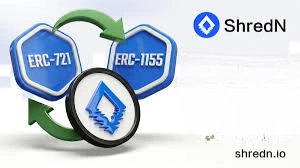
ShredN is a decentralized protocol designed to unlock liquidity within the NFT market — a problem many collectors and traders have faced for years. In contrast to basic NFT marketplaces, ShredN provides specialized liquidity solutions tailored to the unique characteristics of different NFT standards, such as ERC‑721 and ERC‑1155 tokens.
Rather than treating all NFTs the same, the platform differentiates assets based on their rarity traits and individual identifiers. This enables more nuanced valuation, price discovery, and tradability. The protocol also incorporates mechanisms like fragmentation, NFT Automated Market Maker (AMM) systems, and trait‑based trading strategies.
ShredN supports a multi‑chain vision, aiming to integrate liquidity solutions across all public blockchain networks where NFTs exist, making it more accessible and comprehensive than single‑chain alternatives.
The SHRED Token and Its Role
The SHRED token is the native utility and governance token of the ShredN ecosystem. It is designed not only as a tradable digital asset but also as an integral component of the platform’s core functions.
SHRED serves several key roles:
- Community Governance: SHRED holders can participate in governance decisions, including protocol upgrades and which NFT projects get supported or listed on the platform.
- Fee Incentives: Users who hold SHRED are eligible for reduced fees when trading NFTs through ShredN. This structure encourages token ownership and long‑term engagement.
- Liquidity Provider Rewards: A portion of the trading fees collected by the protocol is distributed to users who provide liquidity, and rewards are often paid out in SHRED.
With a fixed total supply (e.g., 100 million tokens), SHRED’s utilities extend beyond simple trading value and into governance, incentive alignment, and ecosystem growth.
Why ShredN Was Built
The NFT market has experienced explosive growth, but liquidity remains a major pain point. Many high‑value NFTs become illiquid because there simply aren’t enough buyers or efficient mechanisms for pricing and trading. Platforms that rely on traditional listing and auction models often struggle with slow price discovery and limited market depth.
ShredN was created to address these challenges by offering targeted liquidity solutions. This includes:
- Fragmentation: Allowing NFTs to be divided into smaller, tradable units, lowering barriers to entry and widening the pool of potential buyers.
- NFT AMM Systems: Enabling immediate trading without the need for a direct counterparty.
- Trait‑Based Pricing: Recognizing unique attributes and the rarity of individual NFTs for more accurate valuation.
By tailoring liquidity strategies to different NFT types and traits, ShredN helps enhance market efficiency, price discovery, and accessibility — all factors that traditional marketplaces have struggled to provide.
How SHRED Fits Into the Broader NFT Ecosystem
In the broader NFT ecosystem, SHRED aims to be more than just another marketplace token. Its design embeds utility, governance, and incentive mechanisms that encourage deeper ecosystem participation.
As NFT markets continue to grow and diversify across chains, ShredN’s multi‑chain liquidity solutions could play a crucial role in connecting fragmented markets, improving price discovery, and making NFTs more tradable and accessible.
With community governance, SHRED holders help shape the protocol’s future — fostering a more decentralized and democratized approach to NFT market infrastructure.
SHRED functions as both a practical utility instrument within the ShredN platform and a strategic token positioned to influence how NFTs are traded, valued, and governed in a rapidly evolving digital economy.
Core Features of the ShredN Platform
The ShredN platform is designed to address some of the most persistent challenges in the NFT ecosystem, particularly liquidity and cross-platform access. While traditional marketplaces often treat NFTs as standalone assets, ShredN integrates specialized tools and protocols to ensure assets can be efficiently priced, traded, and accessed across multiple networks. Its core features emphasize utility, operational efficiency, and interoperability, making it a performance-driven platform for collectors, traders, and NFT enthusiasts alike.
Targeted Liquidity Solutions for NFTs
Liquidity remains a key limitation in the NFT market. High-value NFTs or niche collections often remain idle for long periods due to insufficient buyer participation or market inefficiencies. ShredN tackles this issue by offering targeted liquidity solutions tailored to the unique characteristics of digital assets.
Key approaches include:
- Fractionalization: Dividing NFTs into smaller, tradable units, allowing more buyers to participate in markets that were previously accessible only to high-net-worth individuals.
- NFT Automated Market Makers (AMMs): Facilitating immediate trades without the need for a direct counterparty, which accelerates market activity and ensures smoother price discovery.
- Trait-Based Pricing: Evaluating assets according to rarity and specific attributes to generate fair and dynamic valuations, enhancing transparency and confidence in trades.
By providing these targeted liquidity tools, ShredN creates a more dynamic and responsive NFT marketplace where assets are easier to move, evaluate, and monetize.
ERC‑721 and ERC‑1155 Support Nuances
NFTs exist in different standards, with ERC‑721 and ERC‑1155 being the most widely used. ShredN recognizes that each standard comes with unique characteristics and trading requirements.
- ERC‑721 NFTs are unique, indivisible tokens that often carry high collector value. ShredN’s mechanisms for ERC‑721 focus on precise valuation, fractionalization options, and enabling liquidity while maintaining asset uniqueness.
- ERC‑1155 NFTs are multi-token standards that can represent both unique and semi-fungible assets. ShredN optimizes trading and bulk operations for these tokens, allowing efficient batch transactions, aggregation, and pricing models tailored to semi-fungible collections.
This nuanced approach ensures that both individual collectors and institutional traders can interact with the platform in ways that respect the technical characteristics of their NFTs.
Aggregation of Existing Liquidity Platforms
ShredN aims to reduce fragmentation in the NFT ecosystem by aggregating existing liquidity sources. Instead of forcing users to navigate multiple marketplaces individually, ShredN pulls together pricing data, liquidity, and order books from various platforms to provide a consolidated view of market opportunities.
Benefits include:
- Enhanced price discovery and competitive trading
- Increased transaction volume due to broader market access
- Reduced reliance on multiple interfaces, streamlining user workflows
- Ability to identify undervalued or high-potential assets efficiently
By acting as a unifying layer over fragmented markets, ShredN improves the efficiency and transparency of NFT trading.
Multi‑Chain Vision for NFT Access
ShredN’s vision extends beyond single-chain limitations. NFTs are increasingly spread across multiple blockchains, and traditional marketplaces often struggle to offer cross-chain access. ShredN addresses this through a multi-chain architecture designed to allow seamless interaction with NFTs on various networks.
This vision includes:
- Cross-chain listing and trading support
- Unified portfolio management across supported networks
- Interoperable liquidity tools that operate regardless of the underlying blockchain
By combining multi-chain accessibility with liquidity aggregation and targeted NFT tools, ShredN positions itself as a versatile platform capable of meeting the evolving demands of the NFT ecosystem.
Overall, ShredN’s core features emphasize liquidity optimization, technical standard adaptability, market aggregation, and cross-chain interoperability, providing both collectors and traders with a more efficient, transparent, and accessible NFT marketplace.

How ShredN Improves NFT Liquidity
The NFT ecosystem has seen explosive growth over the past few years, but one persistent challenge has been liquidity. Unlike fungible cryptocurrencies, NFTs are unique or semi-fungible assets, making them inherently harder to trade quickly or accurately value. ShredN was designed to address these challenges with tools and protocols that enhance market efficiency, ensure fair pricing, and create actionable liquidity pathways for collectors, traders, and investors.
Challenges in Current NFT Markets
Traditional NFT marketplaces often struggle to provide sufficient liquidity for several reasons:
- Low Buyer Participation: High-value NFTs or niche collections may have limited buyers, resulting in prolonged listing times.
- Fragmented Marketplaces: NFTs are spread across multiple platforms and blockchains, forcing users to navigate numerous interfaces and wallets.
- Opaque Valuations: Pricing rarely reflects the underlying rarity traits or collection context, leading to over- or under-valued assets.
- Single-Asset Transactions: Many platforms lack batch transaction functionality, making trading multiple assets cumbersome and time-intensive.
These challenges can leave NFTs idle for extended periods, reducing the potential for active market engagement and undermining confidence in pricing. Without mechanisms to address these inefficiencies, even high-quality digital assets can remain illiquid.
ShredN’s Tailored Liquidity Models
ShredN introduces targeted liquidity solutions specifically designed to mitigate these market inefficiencies. By incorporating fractionalization, automated market maker (AMM) protocols, and collection-based strategies, the platform enables NFTs to be more tradable and accessible:
- Fractionalization: NFTs can be divided into smaller, tradable units, allowing multiple buyers to participate in ownership and reducing barriers to entry.
- NFT AMM Systems: These protocols allow assets to be traded instantly without requiring a direct buyer or seller match, providing continuous liquidity.
- Trait-Based Grouping: By organizing NFTs based on rarity, traits, and collection membership, ShredN facilitates group trading and pricing models that better reflect the value of each asset subset.
These tailored models bridge the gap between traditional listing methods and active, liquid markets, allowing for faster transactions and improved engagement.
Impact on Valuation Fairness for Rare Traits
One of the most significant advantages of ShredN’s liquidity-focused design is its ability to reflect rarity and trait value accurately. Traditional marketplaces often fail to differentiate between high- and low-value traits within collections, which can distort pricing:
- ShredN’s trait-based models highlight scarcity and uniqueness, ensuring rare NFTs are recognized appropriately in pricing and liquidity pools.
- Fractionalized ownership allows for smaller investments in high-value assets, spreading market participation without diluting the perceived rarity.
- Collectors and traders can engage with NFTs knowing that valuations are grounded in systematic, transparent methods rather than subjective listings.
Ultimately, ShredN’s liquidity enhancements promote faster trading, fairer valuations, and more accessible ownership, addressing a fundamental limitation in the NFT ecosystem. By combining fractionalization, AMM protocols, advanced pricing models, and multi-platform aggregation, ShredN positions itself as a platform where NFTs can truly operate as liquid, market-ready digital assets.
How to Acquire & Use SHRED
The SHRED token is the core utility and governance asset of the ShredN platform, enabling users to participate in liquidity pools, trade NFTs, and engage with ecosystem features. Acquiring and managing SHRED requires understanding both exchange trading practices and wallet management, as well as knowing how to leverage the token within the marketplace for maximum utility. This guide walks users through practical steps to acquire, secure, and use SHRED effectively.
Steps to Trade SHRED on Exchanges
SHRED can be obtained through cryptocurrency exchanges where it is officially listed. The general procedure for acquiring SHRED is as follows:
- Choose a Supported Exchange: Begin by identifying exchanges that list SHRED. Always verify the exchange’s credibility through official announcements or market tracking platforms.
- Create and Verify Your Account: Many exchanges require identity verification (KYC) before trading, so prepare personal identification documents as needed.
- Deposit Funds: Fund your exchange account with fiat currency or cryptocurrency such as USDT, ETH, or BTC, depending on the trading pair available for SHRED.
- Locate the SHRED Trading Pair: Use the platform’s search feature to find the appropriate trading pair.
- Place an Order: Execute a market order for instant purchase or a limit order to buy SHRED at a preferred price.
After purchasing, users may leave tokens on the exchange temporarily, though moving them to a self-custody wallet is recommended for better control and security.
Adding SHRED to Self-Custody Wallets
To maintain full control over SHRED tokens and integrate with the ShredN marketplace, users should transfer their assets to a self-custody wallet such as MetaMask.
Steps include:
- Install a Wallet: Download and configure a wallet compatible with the blockchain network supporting SHRED.
- Copy Your Wallet Address: Carefully copy the public address to use as the destination for your transfer.
- Initiate a Withdrawal from the Exchange: Enter the wallet address, confirm network compatibility, and specify the number of SHRED tokens to send.
- Verify and Confirm: Double-check all details before submitting the transfer to avoid irreversible mistakes.
Once SHRED is in a self-custody wallet, it can be connected to the ShredN platform to interact with marketplace features and liquidity pools.
Practical Uses Within the Marketplace
SHRED is more than a tradable asset; it provides practical utility within the ShredN ecosystem. Users can:
- Participate in NFT liquidity pools: Supply SHRED alongside NFTs to create fractionalized trading opportunities.
- Pay platform fees: Reduce transaction costs when listing, buying, or selling NFTs on ShredN.
- Engage in governance: Vote on protocol updates, supported collections, or other community decisions.
- Earn rewards: Receive SHRED as incentives for providing liquidity or other contributions to the platform.
By integrating SHRED into daily marketplace activity, users can maximize both financial and functional benefits from holding the token.
Safety Tips and Wallet Compatibility Notes
Security is critical when managing SHRED or any cryptocurrency. Users should consider:
- Confirming Network Compatibility: Ensure the wallet supports the blockchain where SHRED resides. Using the wrong network can result in permanent loss.
- Using Hardware Wallets for Storage: For long-term holdings, hardware wallets provide offline security against hacks.
- Enabling Two-Factor Authentication: Add extra layers of security to exchange accounts and wallet access.
- Avoiding Suspicious Links: Always interact with ShredN through official URLs to prevent phishing attacks.
Popular wallets compatible with SHRED typically include MetaMask, Trust Wallet, and other Web3-enabled wallets capable of handling ERC-based tokens. Proper setup ensures seamless participation in ShredN while maintaining strong security practices.
By following these steps, users can confidently acquire, secure, and utilize SHRED to engage with the ShredN ecosystem, participate in NFT liquidity activities, and benefit from the broader NFT market opportunities the platform offers.
ShredN SHRED stands out as a utility‑driven token designed to power a marketplace dedicated to deeper NFT liquidity, community governance, and real utility perks. Whether you’re an NFT enthusiast, trader, or liquidity provider, understanding how SHRED functions — from its role in fee structures to its governance influence — is key to unlocking the full potential of this emerging ecosystem.
The NFT marketplace is designed for professional traders seeking speed, efficiency, and control. With over $7.4 billion in total GMV and a rapidly growing user base, Blur has redefined the NFT trading experience. By offering zero marketplace fees, advanced portfolio analytics, and features like multi-marketplace sweeping and rapid reveal sniping, Blur caters to the needs of serious traders.
Explore the platform, engage in governance, and leverage SHRED to elevate your NFT trading experience!
[…] High-Volume Trading: The fee-free environment encourages frequent trades, benefiting both liquidity and price discovery within the NFT […]