
ShareX SHARE: Web3 Infrastructure for the Sharing Economy

Table of Contents
What if everyday services such as renting a power bank or using a vending machine could help connect the physical economy with blockchain technology? That is the idea behind ShareX (SHARE), a project building Web3 infrastructure for the global sharing economy. Instead of focusing solely on digital assets, ShareX aims to connect real-world devices, usage records, payments, and business activity with verifiable on-chain systems.
Its ecosystem includes the Deshare Protocol, tools for integrating shared devices, consumer-facing engagement initiatives, and financial applications built around real-world assets. The project also presents SHARE as its ecosystem utility token, with intended roles in service payments, participation, incentives, and governance. These ideas place ShareX at the intersection of decentralized physical infrastructure networks (DePIN), real-world asset applications (RWA), and consumer-facing Web3 services. However, the potential of this model depends on reliable device data, successful business integrations, and sustainable demand.
For more insights and updates on the latest cryptocurrency trends, check out our Nifty Finances platform, your gateway to smarter financial decisions in the digital economy.
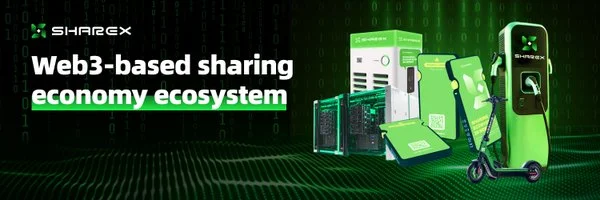
What Is ShareX and How Does Its Sharing Economy Network Work?
ShareX is a Web3 infrastructure project designed to connect traditional sharing economy businesses with blockchain-based systems. Its goal is to bring everyday shared devices, real-world usage data, and related business cash flows into a more verifiable digital framework. These devices can include shared power banks, vending machines, smart lockers, charging stations, and other unattended services that consumers use in public spaces.
The sharing economy already operates across many industries, but much of its infrastructure relies on separate platforms, payment systems, and operator-managed databases. ShareX aims to connect these existing services with Web3 technologies, allowing businesses to explore transparent data records, digital incentives, and new ways to represent real-world assets on-chain.
Understanding the Challenges of the Sharing Economy
Shared-device businesses often operate across different cities, brands, hardware providers, and payment networks. A consumer might rent a power bank from one operator and use a vending machine from another, while each business maintains its own systems for device management, transactions, and customer accounts.
This fragmented environment can create several challenges:
- Limited interoperability: Devices and software from different providers may not communicate through a common technical framework.
- Data verification: Operators may maintain usage and revenue records in separate systems, making independent verification more difficult.
- Payment complexity: Different services may rely on different payment methods, reconciliation processes, and regional requirements.
- Limited consumer participation: Users who generate business activity through device rentals or purchases may have few ways to participate in broader digital reward systems.
ShareX’s approach is to provide infrastructure that can connect these separate systems without necessarily requiring businesses to replace their existing hardware or redesign their entire operations.
How ShareX Connects Physical Devices With Blockchain
A central component of the ShareX ecosystem is the Deshare Protocol and its associated integration toolkit. These are designed to connect shared devices and their operational data with blockchain-based infrastructure.
In the intended model, devices generate records when users rent equipment, complete transactions, or access services. Relevant information can then be processed and verified before selected records or proofs are anchored on-chain. Smart contracts can potentially support settlement rules, reward distribution, and other predefined processes.
This approach could make aspects of device activity and associated cash flows easier to audit. However, blockchain records do not automatically prove that every real-world event occurred exactly as reported. Reliable device identities, secure data collection, accurate payment records, and trustworthy verification processes remain essential.
ShareX at the Intersection of DePIN, RWA, and Web3
ShareX brings together three concepts that help explain its broader vision.
Decentralized Physical Infrastructure Networks (DePIN) use blockchain-based coordination and incentives to support physical infrastructure. In ShareX’s case, shared devices and their real-world service activity provide the physical foundation.
Real-World Assets (RWA) involve representing assets or associated rights digitally. ShareX aims to use verifiable operating data and revenue information to explore tokenized participation in revenue-generating shared infrastructure.
Consumer Web3 adoption focuses on introducing blockchain technology through everyday activities rather than requiring users to begin with specialized crypto applications. Renting a power bank or interacting with a connected vending machine could become an entry point for digital rewards or other Web3 services.
These connections are part of ShareX’s stated strategy. Their financial and operational outcomes depend on implementation, legal arrangements, and actual user participation.
How Different Participants May Join the Ecosystem
ShareX’s model involves several potential participant groups. Consumers can use supported devices and may access reward or payment features through participating applications. Device operators and merchants can integrate infrastructure, connect operational records, and explore new customer-engagement tools. Hardware providers and technology partners can contribute devices, software, connectivity, or integration services.
The Deshare Alliance is intended to bring together sharing economy brands and Web3 infrastructure partners. ShareX’s official materials describe integrations involving power-bank services and other device categories, illustrating how the model can extend beyond a single business.
Nevertheless, announced partnerships, connected devices, and active commercial deployments are different measures of adoption. Readers should examine current product availability and independently verifiable operating data rather than treating every stated ecosystem target as fully achieved.
What ShareX Could Mean for the Sharing Economy
ShareX aims to make shared-device infrastructure more interoperable and its activity more verifiable, while creating potential connections between physical services and on-chain value. If implemented effectively, this model could help businesses streamline integrations and give consumers more ways to interact with Web3 through familiar services.
Its long-term success will depend on reliable data, practical integrations, sustainable business economics, and genuine demand. As with other blockchain projects, tokenization and digital incentives do not eliminate operational, financial, or regulatory risks. The key question is whether ShareX can translate its infrastructure vision into dependable services and measurable real-world adoption.

ShareX DePIN Infrastructure and Shared Device Applications
Decentralized Physical Infrastructure Networks (DePIN) use blockchain technology, digital incentives, and connected hardware to coordinate physical infrastructure and services. Rather than relying entirely on a single centralized operator, a DePIN model can involve multiple participants who contribute devices, connectivity, resources, or operational services to a broader network. ShareX applies this concept to the sharing economy, aiming to connect consumer-facing devices with digital infrastructure that can record activity and support new ways of managing shared services.
Traditional sharing businesses already depend on physical infrastructure distributed across public spaces, retail locations, transport hubs, and commercial properties. ShareX’s approach focuses on connecting these real-world assets with blockchain-based systems, potentially making operational data more accessible and enabling additional digital services around everyday device usage.
How ShareX Applies DePIN to Shared Consumer Devices
Shared-device networks allow consumers to access equipment or services temporarily without purchasing or owning the underlying hardware. However, operators must coordinate device availability, maintenance, payments, and usage across many locations.
ShareX’s infrastructure concept, associated with the Deshare Protocol, is intended to connect these devices with digital systems and support a more unified approach to data and service coordination.
Relevant device categories may include:
- Shared power banks: Portable batteries that users rent to charge mobile phones while away from home.
- Charging stations: Equipment that provides charging services for phones, electric mobility devices, or other compatible electronics.
- Vending machines: Automated retail systems that process purchases without requiring a staffed checkout.
- Smart lockers: Connected storage units used for parcel collection, temporary storage, or item exchange.
- Other unattended services: Connected kiosks and automated equipment that can record usage and process transactions.
These examples illustrate the wider application of shared-device infrastructure. The presence of a device category within ShareX’s broader vision should not be interpreted as confirmation that every type is currently integrated or operating across its network.
Connecting Physical Devices to Digital Systems
A connected device can generate information about rentals, transactions, operating status, and usage frequency. When these records are transmitted to a digital management system, operators can gain a clearer view of how their infrastructure is performing.
ShareX aims to connect real-world device activity with verifiable digital records. Depending on the implementation, this could support transaction tracking, usage verification, and the recording of selected activity or settlement information on a blockchain.
Such integration may help reduce reliance on disconnected databases and make certain records easier to audit. Nevertheless, the quality of the information still depends on the hardware, software, and verification processes that produce it. Blockchain can preserve recorded data, but it cannot independently guarantee that a sensor is accurate or that every reported event reflects what happened in the physical world.
How Device Operators Could Benefit
For operators managing devices across multiple locations, reliable usage information can help inform business decisions. Activity records may reveal which locations attract the most customers, which devices remain underused, and where service interruptions occur.
Potential operational applications include:
- Monitoring rental frequency and transaction activity.
- Identifying devices that may require inspection or maintenance.
- Comparing performance across locations and device categories.
- Reviewing transaction records to support reconciliation and reporting.
- Understanding usage patterns when planning device placement or expansion.
These insights could help operators allocate resources more effectively. However, actual improvements depend on whether the platform supplies accurate, timely, and actionable information. Operators also need appropriate management tools and processes to turn data into practical decisions.
Why Real-World Operations Still Matter
A DePIN network cannot function through software alone. Shared devices require physical installation, maintenance, electricity, network connectivity, merchant cooperation, and reliable customer support. Power banks need to be recharged and replaced when damaged, vending machines require restocking, and smart lockers need to remain accessible and secure.
Connectivity is equally important because devices must transmit information reliably for monitoring and transaction processing. Poor connections, hardware failures, inaccurate records, and inconsistent maintenance can undermine the usefulness of an otherwise well-designed digital system.
ShareX’s long-term effectiveness therefore depends on real-world deployment and sustained participation from device operators, merchants, hardware providers, and consumers.
Does Blockchain Automatically Make ShareX Decentralized?
No. Integrating blockchain technology does not automatically mean that a physical infrastructure network is fully decentralized or performs better than a conventional system. Important questions include who owns the devices, who controls the software, who validates activity records, how incentives are distributed, and whether participants can operate independently.
ShareX’s DePIN approach offers a framework for connecting shared consumer devices with digital infrastructure. Its practical value will ultimately depend on verifiable deployments, dependable connectivity, transparent operating arrangements, and measurable improvements in how shared services are managed.
ShareFi, Real-World Assets, and Consumer-Grade RWA
ShareX aims to connect traditional sharing businesses with blockchain-based financial applications through an approach it calls ShareFi. The concept brings together shared physical devices, verifiable usage data, and digital products designed to connect consumers with real-world services. Rather than focusing exclusively on large assets such as commercial property or government bonds, ShareX’s consumer-grade real-world asset (RWA) vision emphasizes smaller assets, including shared power banks and other unattended devices.
The underlying idea is that everyday services generate measurable activity and economic value. Blockchain infrastructure could help record selected transactions, track device-related activity, and support digital products linked to real-world usage. However, the rights attached to each product depend on its specific terms and legal structure.
How ShareX Connects Sharing Businesses With ShareFi
Traditional sharing businesses generate revenue when consumers rent devices or pay to access services. Yet the operational data and financial arrangements behind these activities are often managed through separate systems controlled by operators.
ShareX aims to connect shared-device infrastructure through the Deshare Protocol and related RWA applications. In principle, this framework can make selected activity records easier to verify and support blockchain-based processes for tracking participation or handling distributions.
This approach could create opportunities for businesses to connect their physical operations with digital financial products. However, putting information on-chain does not automatically transfer ownership of the underlying equipment or establish a legally enforceable claim to its revenue.
Understanding Consumer-Grade Real-World Assets
RWA tokenization generally involves representing real-world assets, contractual rights, or economic interests through blockchain-based tokens. Consumer-grade RWA applies this concept to smaller assets and services that people encounter in everyday life.
For example, a shared power bank may generate revenue through repeated rentals. If its usage and associated records can be reliably tracked, that information could help support a digital product connected to the device or its related services.
Potential applications include:
- Linking a digital identifier to a particular physical device.
- Recording selected rental or usage events for verification.
- Using documented activity metrics to calculate eligibility for product benefits or distributions.
- Creating digital access rights, membership benefits, or other asset-linked offerings.
The distinction between a physical asset, its operating revenue, and a digital representation is important. A token can represent a specific contractual right without granting the holder legal title to the device itself.
PowerPass: ShareX’s Consumer-Grade RWA Product
PowerPass is presented as ShareX’s first consumer-grade RWA NFT, developed around shared power banks operated by PowerNow in Japan. Its intended consumer-facing utility combines access to services within the PowerNow network with a digital record associated with a mapped device.
The product documentation describes PowerPass as a utility voucher that provides qualifying service-use benefits. It also outlines an optional staking and distribution mechanism. Importantly, the purchase agreement states that PowerPass does not automatically confer ownership or disposal rights over a physical device, equity in a company, or a beneficial interest in an asset.
The documented distribution mechanism is also more specific than simply receiving rental income from an owned power bank. Under the agreement, eligible participants may receive non-guaranteed distributions from an incentive pool managed by ShareX, with operational data used as a reference metric for bookkeeping and distribution calculations. Participation requires staking and is subject to the applicable agreement and rules.
ShareX Keys and Ecosystem Participation
ShareX Keys is an NFT series intended to provide ecosystem access and benefits. According to ShareX’s published materials, different tiers may provide priority access to future RWA offerings, discounts, free redemptions, airdrops, and other community privileges.
These benefits can create a connection between NFT ownership and participation in ShareX’s consumer-facing ecosystem. However, holding a ShareX Key does not, by itself, establish ownership of a power bank, vending machine, or other physical asset. Specific benefits may depend on eligibility, staking, campaign rules, and future product availability.
Risks, Agreements, and Distribution Conditions
Before acquiring any RWA-related token or NFT, users should carefully examine the relevant agreements and understand what they actually receive. Important considerations include:
- Legal rights: Determine whether the product grants service access, asset ownership, revenue rights, or only eligibility for certain benefits.
- Source of distributions: Establish whether payments come from operating revenue, a separate incentive pool, or another source.
- Operating expenses: Consider maintenance, hardware replacement, service fees, and other costs that may affect the underlying business.
- Counterparty and technical risks: Assess reliance on operators, data providers, smart contracts, custodial systems, and platform infrastructure.
- Withdrawal and expiry conditions: Review staking requirements, transfer restrictions, redemption rules, product duration, and conditions for ending participation.
Any potential distributions described in product agreements are not guaranteed returns. Actual benefits may vary, operational performance may change, and users may face financial or technical losses.
The Role of ShareFi in Consumer Web3
ShareX’s ShareFi vision seeks to bring everyday sharing services closer to blockchain-based financial applications. PowerPass and ShareX Keys illustrate two distinct approaches: one centered on service utility and device-linked activity, and the other on ecosystem access and participation benefits.
Whether this model achieves broader adoption will depend on reliable operations, transparent agreements, verifiable data, and sustained consumer demand. The most important consideration is not simply whether a product uses an NFT or blockchain, but whether its underlying rights, benefits, and risks are clearly defined and supported by a functioning real-world service.
ShareX aims to connect everyday sharing services with blockchain infrastructure through device integration, verifiable activity records, digital payments, consumer incentives, and real-world asset applications. Its Deshare Protocol and related ecosystem products provide a framework for connecting physical businesses with Web3, while SHARE is intended to support payments, participation, and coordination across the network. The project’s long-term success will depend on actual device usage, sustainable commercial partnerships, transparent tokenomics, and clearly defined rights for users participating in RWA products.
The sharing economy has exploded in recent years, but the current systems often rely on centralized platforms that create friction and inefficiency. That’s where ShareRing (SHR) comes in! Using cutting-edge blockchain technology, SHR is building a decentralized ecosystem that makes it easier, safer, and more efficient to share everything from accommodation to transportation and beyond.