
How Does SafePal Work?

Table of Contents
SafePal is a non-custodial cryptocurrency wallet ecosystem that lets users manage digital assets while retaining control of their private keys and recovery phrases. It combines software wallets, a browser extension, and hardware wallets, allowing users to store, send, receive, swap, and interact with supported blockchain applications. The exact features available can vary by wallet type, blockchain, asset, and region.
This article is for informational purposes and not financial advice. Cryptocurrency involves technical and financial risks. Do Your Own Research (DYOR) before using SafePal or any other crypto wallet.
For more insights and updates on the latest cryptocurrency trends, check out our Nifty Finances platform, your gateway to smarter financial decisions in the digital economy.
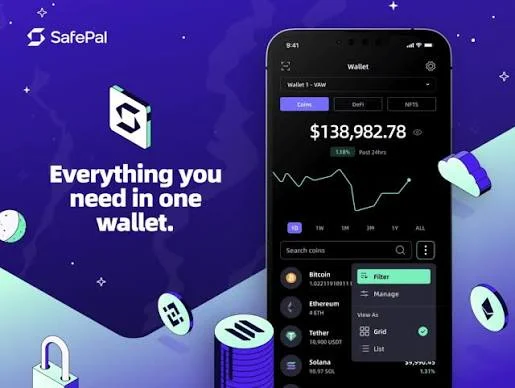
What Is SafePal?
Founded in 2018, SafePal began as a hardware-wallet project and expanded into a broader wallet suite. Its current products include the SafePal mobile app, browser extension, and S1, S1 Pro, and X1 hardware wallets.
The ecosystem supports assets including Bitcoin, Ethereum, stablecoins, tokens, and NFTs across numerous blockchain networks. SafePal also provides access to cross-chain swaps, trading, earning tools, and decentralized applications.
How Does SafePal Work?
SafePal works as a collection of wallet products connected through a common ecosystem. The mobile app provides the main interface for managing assets, while the browser extension provides desktop access to wallets and Web3 applications. Hardware wallets can add an offline signing layer by keeping private keys on a dedicated device.
Users can create or import wallets, manage assets across supported networks, and use integrated services from the SafePal interface. SafePal currently says its ecosystem supports more than 200 blockchains.
How Does the SafePal Wallet App Work?
The SafePal app allows users to create new wallets or import existing wallets using recovery phrases or other supported credentials. Once a wallet is set up, users can view balances, receive cryptocurrency, send transactions, manage tokens and NFTs, and access supported crypto services.
SafePal states that it does not store sensitive account information such as users’ private keys or seed phrases. This means the user is responsible for securing the recovery information needed to restore a wallet.
The app can also manage compatible hardware wallets, allowing software and hardware products to work together.
How Does SafePal Hardware Wallet Security Work?
SafePal’s S1 and S1 Pro use an air-gapped design in which transactions are transferred using QR codes rather than Wi-Fi, Bluetooth, NFC, or a USB data connection. SafePal describes the S1 Pro as using a secure element, PIN and passphrase protection, device-authentication measures, and an anti-tampering self-destruct mechanism.
The X1 uses Bluetooth connectivity and has a different hardware design. SafePal’s current product information lists secure-element technology, PIN and passphrase protection, device authentication, and anti-tampering features across its hardware range, although specific features differ by model.
These are documented product features and security claims, not guarantees that a device is impossible to compromise.
How Does SafePal Transaction Signing Work?
A typical hardware-wallet transaction begins in the SafePal app. The user enters the recipient address and amount, reviews the transaction, and then authorizes it using the connected hardware device.
With the air-gapped S1 and S1 Pro, transaction information is transferred between the app and hardware wallet through QR codes. The private key remains on the hardware device and is used there to sign the transaction. The signed transaction is then returned to the app and broadcast to the blockchain. SafePal’s X1 uses its supported connectivity methods instead.
How Does SafePal Send and Receive Crypto?
Receiving cryptocurrency normally involves providing a wallet address compatible with the particular blockchain and asset. Sending requires entering or scanning the destination address, selecting the correct network and amount, reviewing the transaction, and authorizing it.
Users should carefully check addresses and networks before confirming transfers. They also need enough of the relevant blockchain’s native asset to cover applicable network fees. SafePal provides address-verification and transaction-security features within its wallet products.
How Do SafePal Swaps, Trading, and Earn Features Work?
SafePal integrates swap, trading, staking, and earning functions into its ecosystem. Its app describes cross-chain swapping and trading services, while SafePal Earn provides access to yield-oriented products and staking or DeFi opportunities.
These services should be distinguished from basic wallet functions. Some may rely on third-party exchanges, protocols, liquidity pools, or other external services. Returns are not guaranteed, and users can face smart-contract, liquidity, market, or counterparty risks.
How Does SafePal Connect to DApps and Web3?
SafePal can connect users with decentralized applications across supported blockchain networks. The mobile app provides an integrated DApp environment, while the browser extension can connect to applications such as decentralized exchanges, lending platforms, NFT marketplaces, and other Web3 services.
When using a DApp, users may approve token spending or smart-contract transactions. SafePal provides tools such as DApp screening and an approval manager, but users should still verify DApp URLs, permissions, addresses, and transaction details before approving anything.
SafePal combines software wallets, hardware wallets, private-key control, transaction signing, asset management, swaps, earning services, and Web3 access within one ecosystem. Hardware devices can add a signing layer, while the mobile app and browser extension provide broader access to supported assets and applications.
Regardless of the wallet type, users remain responsible for protecting recovery phrases, checking transaction details, selecting the correct networks, and avoiding phishing sites and malicious applications. Using official SafePal software and genuine hardware products is an important part of maintaining wallet security.
[…] SafePal was founded in January 2018 by Veronica Wong and co-founders. Its first hardware wallet, the SafePal S1, launched in 2019. The company subsequently expanded into a software wallet and browser extension, creating a broader wallet suite. […]