
How to Stake TrueUSD

Table of Contents
TrueUSD (TUSD) is a USD-linked stablecoin, not a proof-of-stake blockchain token that users stake to help validate a network. TUSD itself does not function like a native staking asset used by a blockchain’s validators. When people refer to “staking TUSD,” they may instead mean depositing or supplying TUSD to a separate decentralized finance (DeFi), lending, liquidity, or yield-generating protocol.
This article is for informational purposes and is not financial advice. Readers should Do Your Own Research (DYOR) and independently verify current information before using any cryptocurrency platform or protocol.
For more insights and updates on the latest cryptocurrency trends, be sure to check out our Nifty Finances platform, your gateway to smarter financial decisions in the digital economy.
What Is TrueUSD (TUSD)?
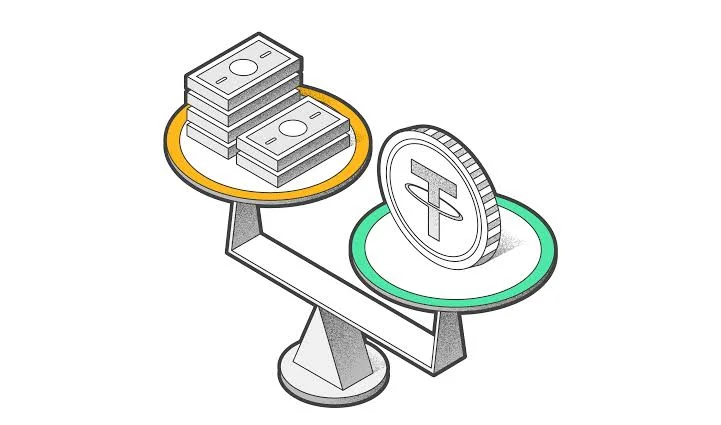
TrueUSD is a stablecoin designed to maintain a value close to one U.S. dollar. It is a cryptocurrency that can operate across supported blockchain networks and can be transferred between compatible addresses.
Unlike a proof-of-stake network’s native token, TUSD does not provide the consensus mechanism that secures a blockchain. Its primary role is to represent dollar-denominated value within supported cryptocurrency ecosystems.
TUSD’s official documentation describes functions including minting, redemption, transfers, and integrations across its supported networks. These functions are separate from traditional proof-of-stake staking.
How to Stake TrueUSD (TUSD)
The term “staking TUSD” can be confusing because traditional staking normally involves locking or delegating a blockchain’s native token to support proof-of-stake network operations.
TUSD does not work that way. Instead, a user may encounter services that allow TUSD to be supplied to a lending market, liquidity pool, or other DeFi application in exchange for potential rewards. This is more accurately described as lending, liquidity provision, or yield generation, rather than native TUSD staking.
The distinction matters because the rewards and risks come from the external protocol rather than from TUSD’s blockchain validation mechanism.
Does TrueUSD Have Native Staking?
TUSD does not use a native proof-of-stake validation mechanism in which TUSD holders stake tokens to validate transactions or secure the TUSD network.
Holding TUSD in a normal cryptocurrency wallet therefore does not automatically produce staking rewards. Similarly, transferring TUSD between compatible addresses is not a staking activity.
Users may encounter third-party platforms using terms such as “TUSD staking,” but the underlying activity should be examined carefully. If TUSD is deposited into a lending market or liquidity pool, the resulting rewards originate from that particular protocol’s mechanism rather than from native TUSD consensus.
How Can TUSD Be Used to Earn Yield?
TUSD may potentially be used in external DeFi applications that provide variable rewards or interest. Depending on the protocol, users may supply TUSD to a lending market, contribute it to a liquidity pool, or use another strategy involving the token.
For lending, returns can be related to borrower demand and the utilization of available liquidity. For liquidity provision, users may receive a share of trading fees or protocol incentives.
These opportunities are distinct from native staking. Rates can change, rewards can end, and deposited assets can be exposed to additional risks associated with the protocol.
How to Deposit TUSD Into a DeFi Protocol
A general process for using TUSD with a DeFi protocol may involve:
- Choose a protocol that currently supports TUSD on the relevant blockchain.
- Connect a compatible Web3 wallet containing TUSD.
- Select TUSD within the protocol’s supply, lending, or liquidity interface.
- Review the terms, including displayed yield information, fees, and withdrawal conditions.
- Approve the token if the smart contract requires a separate approval transaction.
- Confirm the deposit transaction through the connected wallet.
- Monitor the position and any applicable rewards or changing rates.
Users should confirm that the wallet, TUSD contract, and protocol all operate on the same supported network.
How to Evaluate a TUSD Staking Opportunity
Before using a service described as TUSD staking, consider checking:
- The protocol’s documentation and operating model
- Whether TUSD is currently supported
- The source and type of rewards
- The current yield or interest rate and how it can change
- Lock-up periods and withdrawal rules
- Available liquidity
- Smart-contract addresses and technical documentation
- Security history and disclosed vulnerabilities
- Protocol and transaction fees
- The supported blockchain network
A displayed yield is not necessarily guaranteed. Users should understand what generates the reward and what could cause the rate or underlying value to change.
TUSD does not function as a native proof-of-stake asset. Consequently, “staking TUSD” generally refers to using TUSD through an external DeFi, lending, liquidity, or yield-generating protocol rather than participating in TUSD’s own blockchain consensus mechanism.
TUSD itself does not automatically generate staking rewards simply because it is held in a wallet. Any yield opportunity generally comes from a separate protocol or financial mechanism and therefore introduces additional risks beyond those associated with holding TUSD.
Supported protocols, network availability, fees, withdrawal conditions, and DeFi opportunities can change over time. These details should be independently verified before any funds are deposited. Neither the availability of a yield opportunity nor an advertised rate should be interpreted as a guarantee of income or return.
[…] (TUSD) is a stablecoin designed to maintain a value close to one U.S. dollar. Understanding how TUSD works requires looking at the relationship between TUSD tokens, the assets […]