
Duckie Land MMETA: A Blockchain Gaming Metaverse

Table of Contents
What happens when gaming meets NFTs, cryptocurrency, and digital ownership? Duckie Land MMETA aims to bring these elements together through a blockchain-based multiplayer gaming ecosystem. The project describes Duckie Land as a multiplatform multiplayer online game where players can own in-game assets represented by non-fungible tokens (NFTs) and participate in an economy powered by blockchain technology.
At the heart of the ecosystem is MMETA, the project’s token. Rather than treating blockchain simply as a payment layer, Duckie Land connects tokenized assets and gameplay with an economy in which players can contribute, participate, and potentially earn rewards. The project has positioned its virtual world around digital ownership, allowing players to have greater control over game-related assets.
The ecosystem is particularly interesting for readers following GameFi, NFT gaming, metaverse projects, and play-to-earn concepts. But how does Duckie Land actually work? What role does MMETA play? And how do NFTs fit into the game’s economy?
For more insights and updates on the latest cryptocurrency trends, be sure to check out our Nifty Finances platform, your gateway to smarter financial decisions in the digital economy.
What Is Duckie Land MMETA?
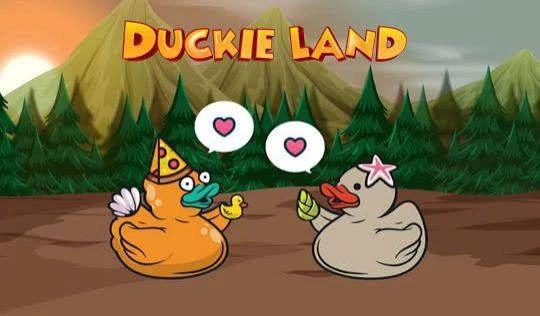
Duckie Land is a blockchain-powered multiplayer gaming ecosystem that combines traditional gaming concepts with NFTs, cryptocurrency, and digital ownership. The project is designed around a virtual world where players can participate in games and activities while interacting with blockchain-based assets. Rather than treating blockchain as a separate financial layer, Duckie Land integrates it into the broader gaming experience and its digital economy.
At the center of this ecosystem is MMETA, the cryptocurrency associated with Duckie Land. The token forms part of the project’s economic structure and is designed to support interactions within its gaming environment. Through blockchain technology, Duckie Land aims to give players greater involvement in the ownership and use of digital assets connected to the ecosystem.
Duckie Land as a Multiplayer Gaming Ecosystem
Duckie Land presents itself as more than a single blockchain game. Its concept revolves around a multiplayer gaming ecosystem, where players can participate in a shared digital environment and interact with other members of the community.
Multiplayer functionality can add an important social dimension to blockchain gaming. Instead of playing in isolation, participants can interact, compete, collaborate, and contribute to the development of an evolving virtual world.
The project combines these gaming elements with blockchain-based ownership. This creates a model in which digital items can potentially have an identifiable ownership record rather than existing solely as assets controlled by a traditional game publisher.
Combining Gaming, NFTs, and Cryptocurrency
One of Duckie Land’s defining characteristics is the combination of gaming, NFTs, and cryptocurrency.
NFTs can represent unique digital assets within a blockchain gaming ecosystem. Depending on the game’s design, these assets may include characters, items, land, collectibles, or other forms of digital property.
Cryptocurrency adds another component to the ecosystem. Instead of relying exclusively on conventional in-game currencies, blockchain games can use tokens to facilitate certain economic activities.
For Duckie Land, MMETA serves as the ecosystem’s associated cryptocurrency. Its role connects the game’s digital economy with blockchain-based transactions and ownership.
However, the presence of NFTs and cryptocurrency does not automatically mean that every digital item will have lasting monetary value. The usefulness and market value of blockchain assets can change according to player demand, marketplace activity, and broader cryptocurrency conditions.
Duckie Land’s Multiplatform Approach
Duckie Land also emphasizes a multiplatform approach to its gaming ecosystem. A multiplatform strategy can make a blockchain game accessible across different devices or gaming environments rather than restricting participation to one specific platform.
This approach can be important for multiplayer ecosystems because a larger potential user base can create more opportunities for interaction.
For blockchain gaming projects, accessibility is particularly relevant. Players may come from different gaming backgrounds, and requiring specialized blockchain knowledge or hardware can create barriers to participation.
A multiplatform ecosystem can therefore help connect conventional gaming audiences with Web3 features such as NFTs, cryptocurrency, and digital ownership.
The Role of MMETA
MMETA is the cryptocurrency associated with Duckie Land and forms part of its broader token-based economy.
Within blockchain gaming, an ecosystem token can serve several purposes depending on the project’s design. It may support transactions, rewards, governance, or other forms of participation.
The important distinction is that MMETA is connected to the Duckie Land ecosystem rather than functioning primarily as a general-purpose payment cryptocurrency.
Its role should therefore be understood in the context of Duckie Land’s gaming and digital economy. Users should check the project’s current documentation for the latest information about token functionality, distribution, and supported applications.
Blockchain and Digital Ownership
Blockchain technology provides Duckie Land with infrastructure for recording ownership and transactions involving digital assets.
In conventional games, items are typically stored within centralized databases controlled by the game developer. Blockchain-based gaming can instead record ownership information on a public or decentralized ledger, depending on the game’s architecture.
This can provide players with greater transparency regarding certain digital assets and allow blockchain-based items to be transferred or traded according to the project’s rules.
However, blockchain ownership does not necessarily mean unlimited control. Smart contracts, marketplace rules, game mechanics, and the project’s infrastructure can all affect how digital assets are used.
Player Participation and Contribution
Duckie Land’s broader concept places players and community members at the center of its ecosystem. Participants are not simply consumers of a finished game; blockchain gaming models can also encourage players to contribute to communities, economies, and digital environments.
This can take different forms, including playing games, acquiring digital assets, participating in community activities, or contributing to the ecosystem’s growth. The combination of multiplayer gaming and blockchain ownership creates an environment where participation can extend beyond gameplay itself.
Duckie Land MMETA represents a blockchain gaming ecosystem built around the intersection of multiplayer experiences, NFTs, cryptocurrency, and digital ownership. MMETA provides the cryptocurrency component of this economy, while blockchain technology supports the project’s approach to digital assets and player participation.
How Duckie Land Combines Gaming and Blockchain
Blockchain gaming combines conventional video game experiences with blockchain-based technologies such as non-fungible tokens (NFTs), cryptocurrencies, and decentralized ownership records. Instead of keeping every digital asset exclusively within a game’s centralized database, blockchain gaming can use distributed ledgers to record ownership and transactions. Duckie Land follows this broader model by combining multiplayer gaming with NFTs, cryptocurrency, and digital ownership.
For players, the main difference is that some game-related assets can exist as blockchain-based tokens. This can create new possibilities for ownership, trading, and participation while adding an economic layer to the gaming experience.
Understanding Blockchain Gaming
Traditional games generally operate through centralized infrastructure controlled by a developer or publisher. Characters, equipment, currencies, and other items are usually stored in databases managed by the game’s operator.
Blockchain gaming introduces another layer. Certain digital assets can be represented by tokens recorded on a blockchain. Ownership can then be verified through the relevant blockchain network rather than relying exclusively on a private game database.
This does not mean that every part of a blockchain game is necessarily decentralized. Game servers, interfaces, gameplay mechanics, and other components can still rely on conventional technology.
Instead, blockchain is typically used for specific functions where verifiable ownership, tokenization, and transparent transactions can provide additional capabilities.
Verifiable Ownership of Digital Assets
One of the major concepts behind blockchain gaming is verifiable digital ownership.
An NFT is a unique blockchain token that can represent a particular digital asset. Its blockchain record can identify the wallet associated with that asset, depending on the network and smart-contract design.
For a gaming ecosystem such as Duckie Land, this technology can provide a way to represent selected digital items as NFTs.
The distinction is important because ownership records can be independently verified on the blockchain rather than existing solely inside the game’s internal systems.
However, blockchain ownership does not automatically mean that an NFT has unlimited functionality. The game developer determines how assets interact with the game, while smart contracts and marketplace rules can impose additional conditions.
NFTs as In-Game Assets
Duckie Land incorporates NFTs into its blockchain gaming concept. These NFTs can represent digital assets associated with the ecosystem, giving certain game-related items a tokenized form.
This creates a connection between gameplay and blockchain infrastructure.
Depending on how an individual NFT is designed and supported, it may be collectible, usable within the game, or potentially tradable through compatible marketplaces.
The important point is that an NFT can provide an identifiable digital representation of an asset. Instead of simply seeing an item listed in a player’s game inventory, ownership can also be associated with a blockchain address.
Traditional Items vs. Blockchain Assets
Traditional game items and blockchain-based assets can appear similar from a player’s perspective, but their underlying ownership models can be different.
A conventional game item is generally controlled by the game’s publisher. Players may be allowed to use the item, but they typically do not own a transferable asset outside the publisher’s infrastructure.
A blockchain-based asset can instead be represented by a token in a player’s wallet.
Key differences can include:
- Ownership records: Blockchain assets can have publicly verifiable ownership records.
- Transferability: NFTs may be transferable between compatible wallets and marketplaces when supported.
- Scarcity: NFT supply can be defined through smart-contract rules.
- Interoperability: Some assets may potentially interact with other applications, although this depends on actual technical support.
- Market activity: Tokenized assets can potentially be traded independently of the game’s internal economy.
These characteristics can give blockchain assets additional possibilities, but they do not guarantee that an asset will retain monetary value or remain useful indefinitely.
Tokenized Resources and Player Utility
Tokenization can potentially give players additional ways to interact with game resources. Instead of being useful only inside a single game environment, certain assets can have a blockchain-based identity that supports ownership, collection, or trading.
For Duckie Land, this approach fits into its broader objective of combining gaming, NFTs, cryptocurrency, and player participation.
Tokenized resources can potentially support several forms of utility:
- Gameplay: Assets may have functions within the gaming environment.
- Collecting: Players can own and organize blockchain-based items.
- Trading: Supported NFTs may be exchanged through compatible markets.
- Community participation: Digital assets can contribute to a broader player-driven economy.
- Digital ownership: Players can hold blockchain-based representations of selected assets in their wallets.
The actual utility of each asset depends on Duckie Land’s implementation and current ecosystem features.
A New Model for Digital Gaming
Duckie Land’s blockchain approach demonstrates how gaming can incorporate digital ownership without completely replacing traditional game technology. NFTs provide a mechanism for representing selected assets, while cryptocurrency can support the economic side of the ecosystem.
The result is a gaming model where players can potentially participate not only through gameplay but also through ownership and interaction with tokenized digital resources.
Duckie Land combines gaming and blockchain by adding verifiable digital ownership and tokenized assets to a multiplayer gaming environment. NFTs can distinguish certain blockchain-based items from conventional game inventory, while tokenization can create additional possibilities for ownership, trading, and player participation.
Duckie Land NFTs and Digital Ownership
Duckie Land combines multiplayer gaming with blockchain technology, NFTs, cryptocurrency, and digital ownership. Within this model, Duckie NFTs can serve as blockchain-based representations of unique digital assets associated with the ecosystem. Rather than treating every game item as an entry in a centralized database, NFTs can provide players with verifiable ownership records stored on a blockchain.
This approach creates a different relationship between players and digital items. However, owning an NFT does not automatically guarantee financial value or unlimited functionality. The usefulness of a Duckie NFT ultimately depends on its role within the ecosystem, the applications that support it, and the demand among players and collectors.
What Are Duckie NFTs?
Duckie NFTs are part of the NFT-based layer of the Duckie Land ecosystem. Non-fungible tokens are unique blockchain assets that can be used to represent digital items, characters, collectibles, or other forms of digital property.
Unlike fungible cryptocurrencies, where one token is generally interchangeable with another of the same type, each NFT can have its own identifier and associated metadata.
For a gaming ecosystem, this technology can provide a way to represent individual digital assets. A player’s NFT can therefore have a distinct blockchain identity rather than existing solely as an item inside a game’s internal inventory system.
The specific functions of individual Duckie NFTs depend on how Duckie Land integrates them into its gaming environment.
NFTs as Digital Characters and Game Assets
Blockchain games can use NFTs to represent assets that players interact with during their gaming experience. These can include characters, collectibles, equipment, land, or other digital resources.
Duckie Land’s use of NFTs fits within this broader blockchain gaming model. A unique NFT can provide an identifiable representation of a digital asset, allowing ownership to be tracked through the relevant blockchain.
This can also make digital items more distinguishable. Two NFTs may belong to the same collection while having different characteristics, identifiers, or attributes.
For players, this introduces a collectible dimension alongside gameplay.
Understanding Player Ownership
One of the most discussed features of NFTs is digital ownership.
When a player holds an NFT in a compatible cryptocurrency wallet, the blockchain can provide a publicly verifiable record connecting that token to the wallet address. This differs from simply having an item assigned to a player account in a centralized game database.
However, blockchain ownership should be understood carefully.
Owning an NFT does not necessarily mean that the player owns the underlying intellectual property, artwork copyright, or unrestricted rights to use the asset. Those rights depend on the project’s terms and licensing arrangements.
Similarly, an NFT may only have utility within specific applications that recognize it.
NFT Ownership vs. Conventional Game Items
Traditional in-game items are generally controlled through the game publisher’s infrastructure. Players can use them according to the game’s rules, but the publisher typically controls the database that records ownership.
Blockchain-based items introduce a separate ownership layer.
Some key differences include:
- Blockchain verification: Ownership can be checked through the relevant blockchain.
- Wallet-based holding: NFTs can be stored in compatible cryptocurrency wallets.
- Transferability: Assets may be transferable when the smart contract and ecosystem support transfers.
- Potential marketplace activity: NFTs can potentially be traded through compatible marketplaces.
- Persistent records: Blockchain ownership records can remain independently verifiable even outside a game’s interface.
These characteristics can give NFTs greater flexibility than conventional game items, although actual functionality depends on Duckie Land’s implementation.
Building Value Through Participation
Players may potentially build value around digital assets through participation in the ecosystem rather than simply purchasing an NFT and holding it.
For example, an asset could become more useful if it provides gameplay functionality, access to activities, or participation in a community-driven environment. Demand can also develop when players value particular characteristics, scarcity, or utility.
This creates an important distinction between utility and speculation.
An NFT may have a market price because buyers expect its value to increase, but that expectation does not guarantee future returns. Cryptocurrency and NFT markets can experience substantial volatility, and demand can change quickly.
Players should therefore consider what an NFT actually does before evaluating its potential value.
Duckie Land NFTs connect digital gaming with blockchain-based ownership. Duckie NFTs can represent unique digital assets while giving players a verifiable record of ownership through blockchain technology. This differs from conventional game items, which are generally controlled through centralized databases.
The broader potential comes from combining ownership with actual participation. If NFTs provide meaningful gameplay, collectible, community, or ecosystem functions, they can become more than simple digital objects. However, users should evaluate their current utility and associated risks rather than purchasing solely because they expect an NFT’s price to rise.
Duckie Land MMETA represents the intersection of blockchain gaming, NFTs, cryptocurrency, and digital ownership. Its multiplayer ecosystem is designed to give players more involvement in the virtual economy, with blockchain technology providing infrastructure for tokenized assets and rewards.
At the center of the ecosystem is MMETA, a BEP-20 token on BNB Smart Chain. The token connects the project’s gaming economy with the broader cryptocurrency market, while NFTs give players a way to own unique digital assets.
What if your fantasy RPG adventures could actually generate crypto rewards? That’s exactly the vision behind Wizardia — a blockchain-powered Play-to-Earn ecosystem blending strategy battles, NFTs, and metaverse economics into one immersive gaming universe. Built as an AAA-quality turn-based RPG, Wizardia combines competitive PvP combat, character progression, staking systems, and NFT ownership into a single decentralized experience.
Duckie Land’s approach reflects the broader evolution of GameFi, where playing, collecting, trading, and contributing can become interconnected activities. However, the success of this model ultimately depends on sustainable gameplay, active users, useful digital assets, and a healthy token economy.
[…] is designed as a fantasy metaverse where players can participate in turn-based battles, explore evolving environments, develop […]